EN
EN


Wider screw spread can reduce the risk of short-term femoral head necrosis by optimizing the fixation stability in femoral neck fracture patients with triangle cannulated screw fixation
Shengyu Wan, Jian Zhang, Tongzheng Zhang, Lijunpeng Jia, Xiaozhong Luo, Weixiang Shi, Jiaqi Wang, Jingchi Li, Xi Chen & Wenqiang Xu
Background
A primary complication associated with femoral neck fractures is necrosis of the femoral head. instability of fixation is a significant factor contributing to the elevated risk of femoral head necrosis in patients undergoing internal fixation procelures. Modifications in screw configuration strategies have the potential to substantially infuence fixation stability. Theoretically, a broader distribution of the screw trajectormay enhance immediate postoperative angular stability. Nonetheless, it remains to be determined whether this screw configuration strategy can effectively optimize fixatic stability and subsequently diminish the risk of femoral head necrosis.
Methods
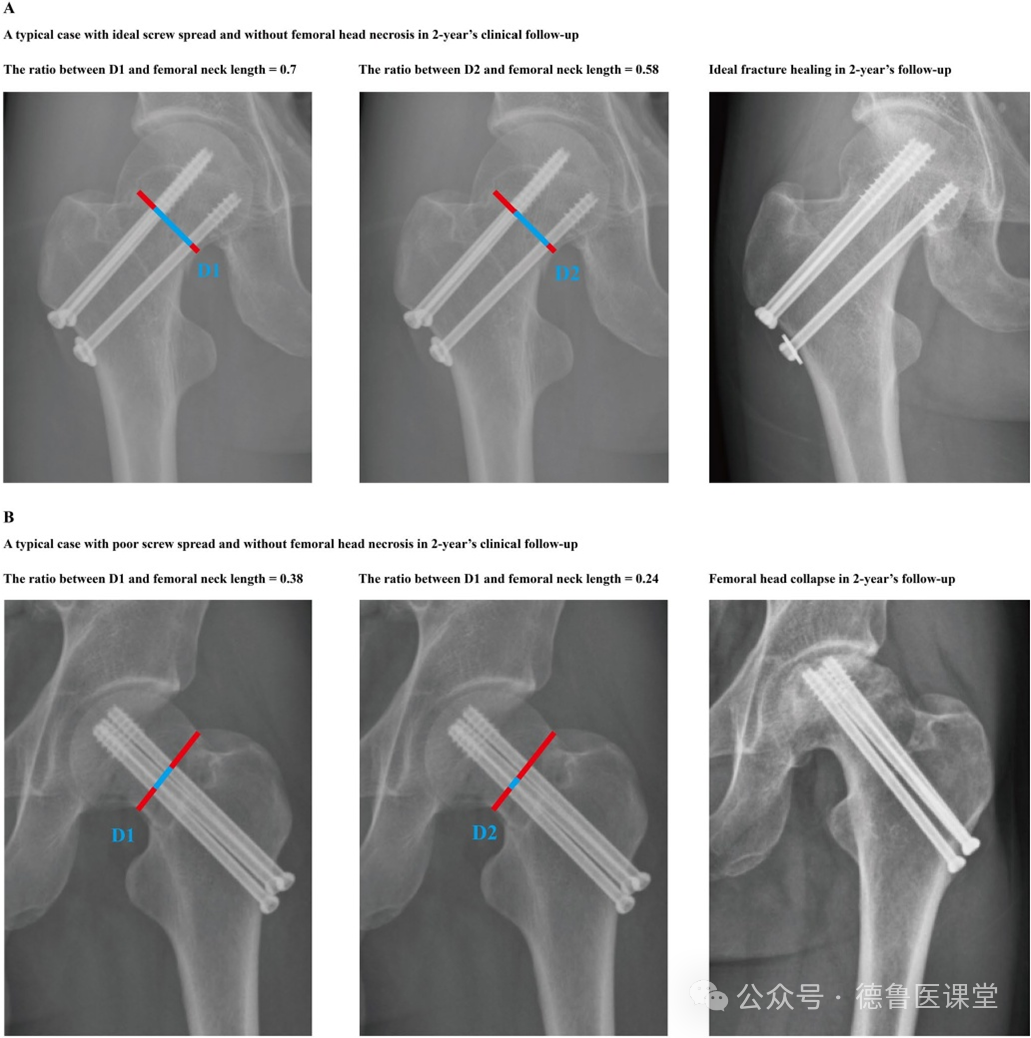
This study involved a comprehensive review of imaging data from patients with femoral neck fractures. The maximum distance between the cranial and caudal screws alone the junction line betwen the femoral head and neck was measured. This measurement was then divided by the length of the femoral neck to calculate the screw spread grade. Differences in this parameter were statistically analyzed between patients with and without femoral head necrosis. Regression analysis was utiized to identify potential risk factors for femoral head necrosis. Additionally, the biomechanical implications of variations in screw spread grade were simulated using three dimensional numerical models,.
Results
The clinical review indicated that patients with femoral head necrosis exhibited suboptimal screw spread grades, which were identified as an independent risk factor for an increased likelihood of developing femoral head necrosis. Furthermore, fixation stability was found to improve with the optimization of screw spread grade.
Conclusions
The risk of short-term femoral head necrosis can be effectively mitigated by optimizing the distribution of screw configurations. Specifically, enhancing screw trajectory with a wider spread, facilitated by a navigation system, may serve as an efficacious biomechanical strategy to reduce the incidence of femoral head necrosis.
In Figure A, the screws are optimally distributed with bone union achieved; in Figure B, the screws are poorly distributed, resulting in femoral head necrosis.
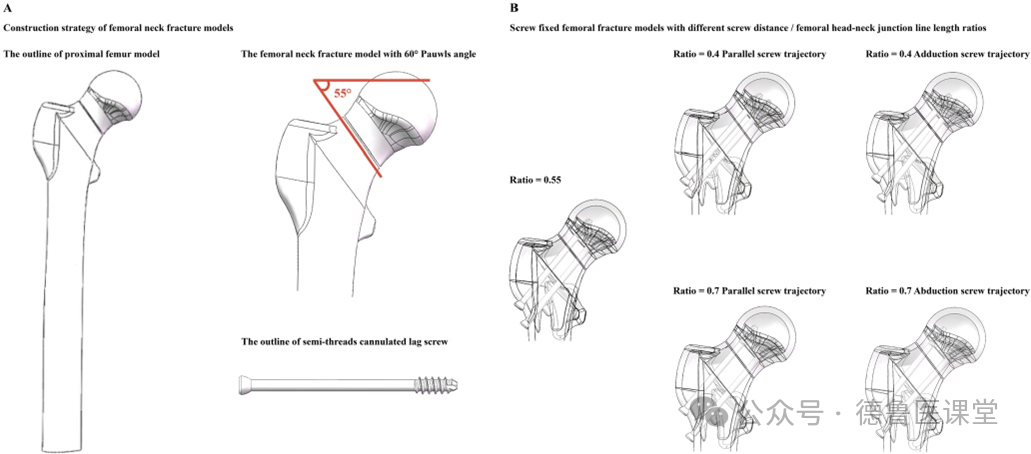
The authors constructed digital models.
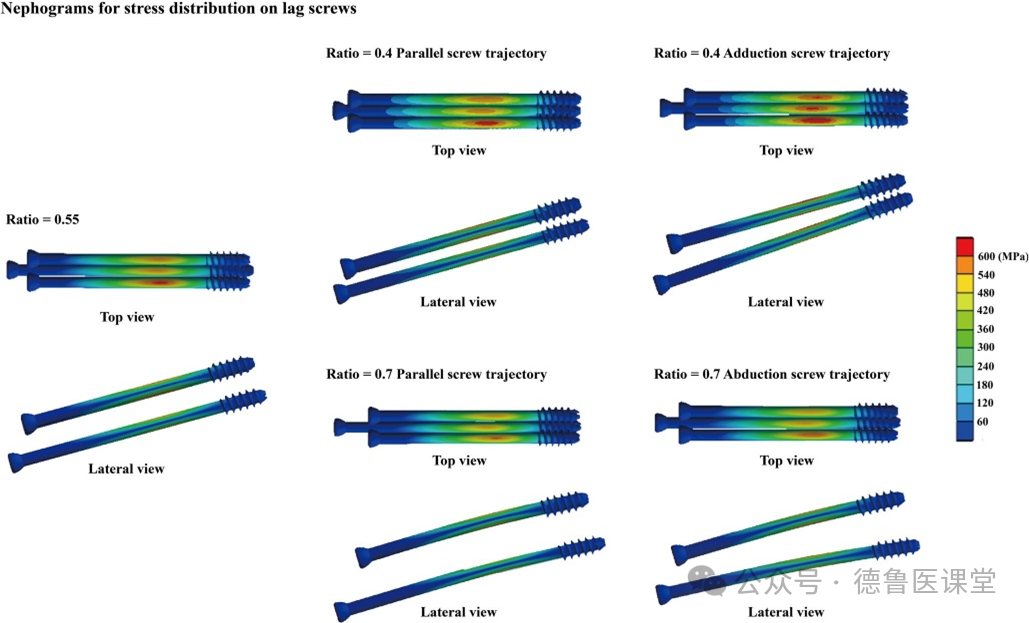
Screw stress varies across different models.
Findings:
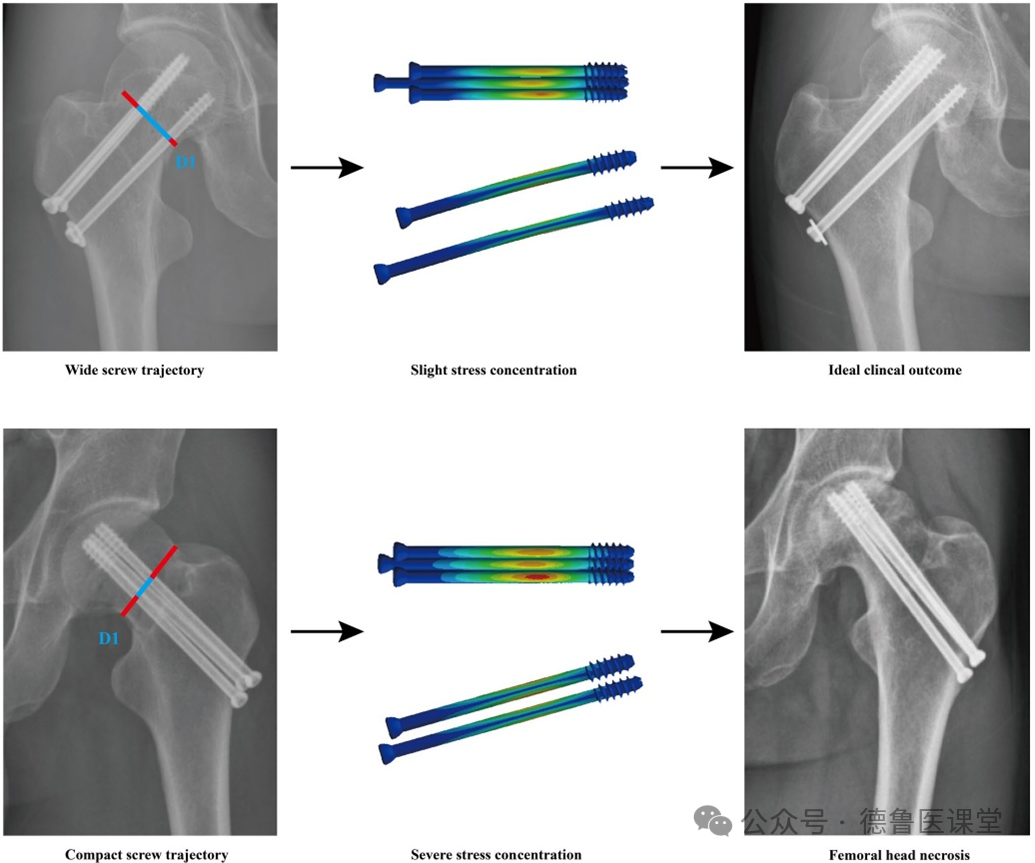
This study demonstrates that optimizing fixation stability and improving screw dispersion can significantly reduce the risk of short-term femoral head necrosis.
Reference article:
European Journal of Orthopaedic Surgery & Traumatology (2026) 36:25 https://doi.org/10.1007/s00590-025-04602-z