EN
EN


تقنية التقليل الموحَّدة في كسور الجزء القريب من عظم العضد
لِتَثبيت الكسر في الجزء القريب من عظم العضد باستخدام لوحة تثبيت، فإن أكثر المضاعفات شيوعًا بعد العملية الجراحية تشمل: الانحراف الجانبي الداخلي غير الصحيح للعظام (الانحراف نحو الداخل)، وانغراس البراغي داخل المفصل، والتنخر العظمي الناتج عن نقص التروية الدموية، وفقدان التموضع الصحيح للكسر. ولذلك فإن تحقيق التموضع التشريحي الصحيح للكسر أثناء العملية الجراحية والحفاظ عليه يُعَدّان العاملين الأساسيين لنجاح التثبيت.
ولمعالجة هذه المسألة، نقدّم تقنية معيارية منهجية تتضمّن خطوات متسلسلة لتقليل الكسر وتثبيته.
الإجراء:
يتم استخدام النهج القياسي الذي يمر بين العضلة الدالية والعضلة الصدرية الكبرى. وتُثبَّت غرز غير قابلة للامتصاص رقم ٥ عبر أربطة الأوتار الدوّارة عند نقطة التقاء الوتر بالعظم، وذلك أساسًا لمساعدة الجرّاح على تقليل الكسر بدقة.
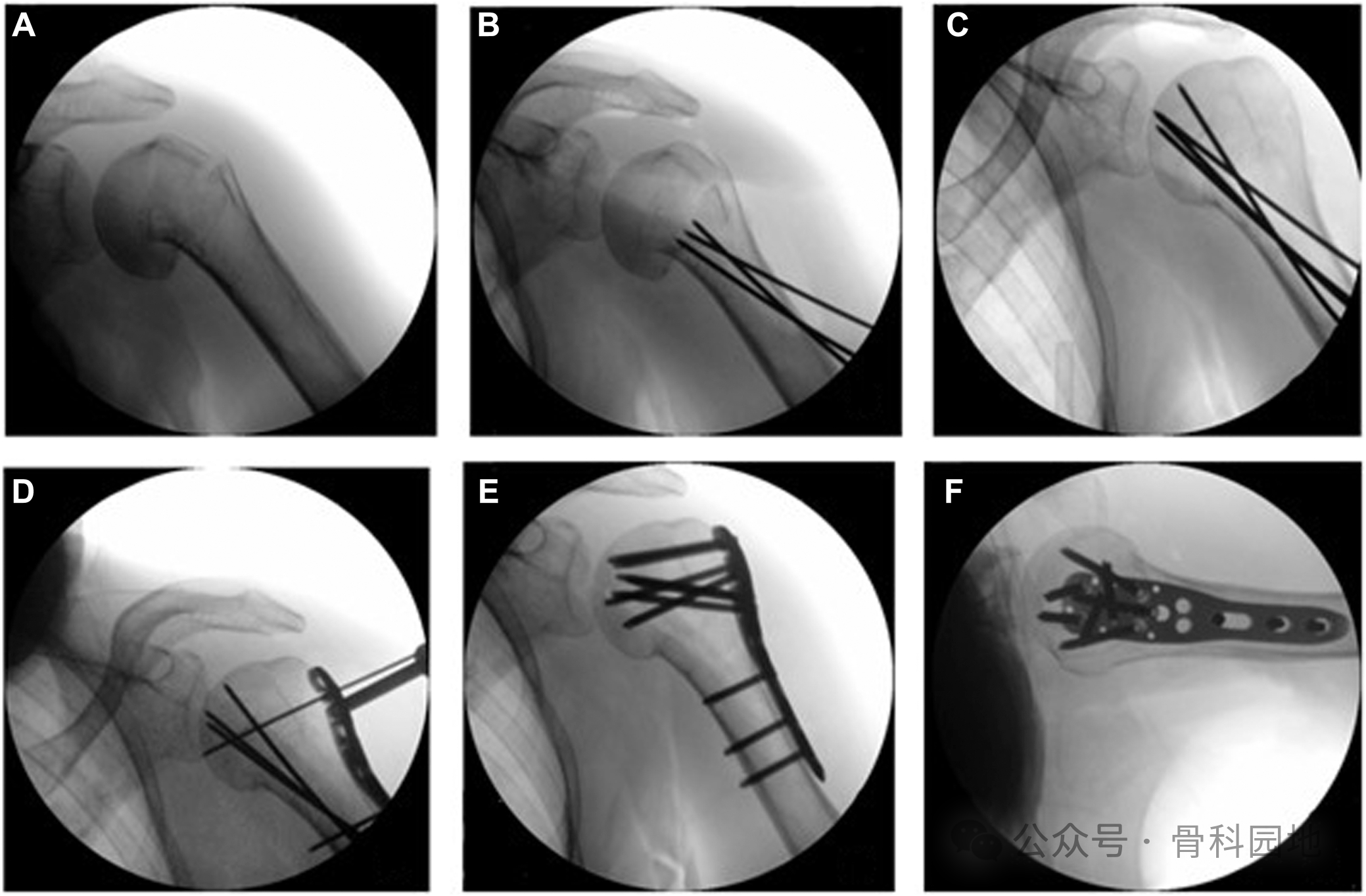
- يتم إدخال ثلاثة أسلاك كيرشнер بقطر ٢,٠ ملم عبر الجلد بطريقة راجعة (من الأسفل إلى الأعلى) داخل جذع عظم العضد، بحيث تتجه نحو خط الكسر (الشكل ب).
- يتم تقليل شظية رأس عظم العضد تقليلًا تشريحيًّا دقيقًا، مع إيلاء اهتمام خاص لإعادة بناء الدعامة الداخلية السليمة. وبعد ذلك، تُدفع أسلاك كيرشنيـر إلى داخل العظم تحت الغضروفي لتوفير الاستقرار المطلوب (الشكل ج).
- بعد ذلك، يُعاد ترتيب شظية التباعد الكبير. وبعد تحقيق الترتيب التشريحي، يُثبَّت لوحة تثبيت زاوية مستقرة وقابضة، وتُثبَّت مؤقتًا باستخدام أسلاك كيرشنر بقطر ١٫٦ مم **(د)**.
- يتم تقييم الوضع بالتصوير الفلوروسكوبي. وقبل إدخال البراغي القابضة، تُثبَّت اللوحة باستخدام براغي قشرية بقطر ٣٫٥ مم. ثم تُزال أسلاك كيرشنر، وتُشد الغرز غير القابلة للامتصاص، ويتم تنفيذ التثبيت النهائي بالبراغي (هـ وو).
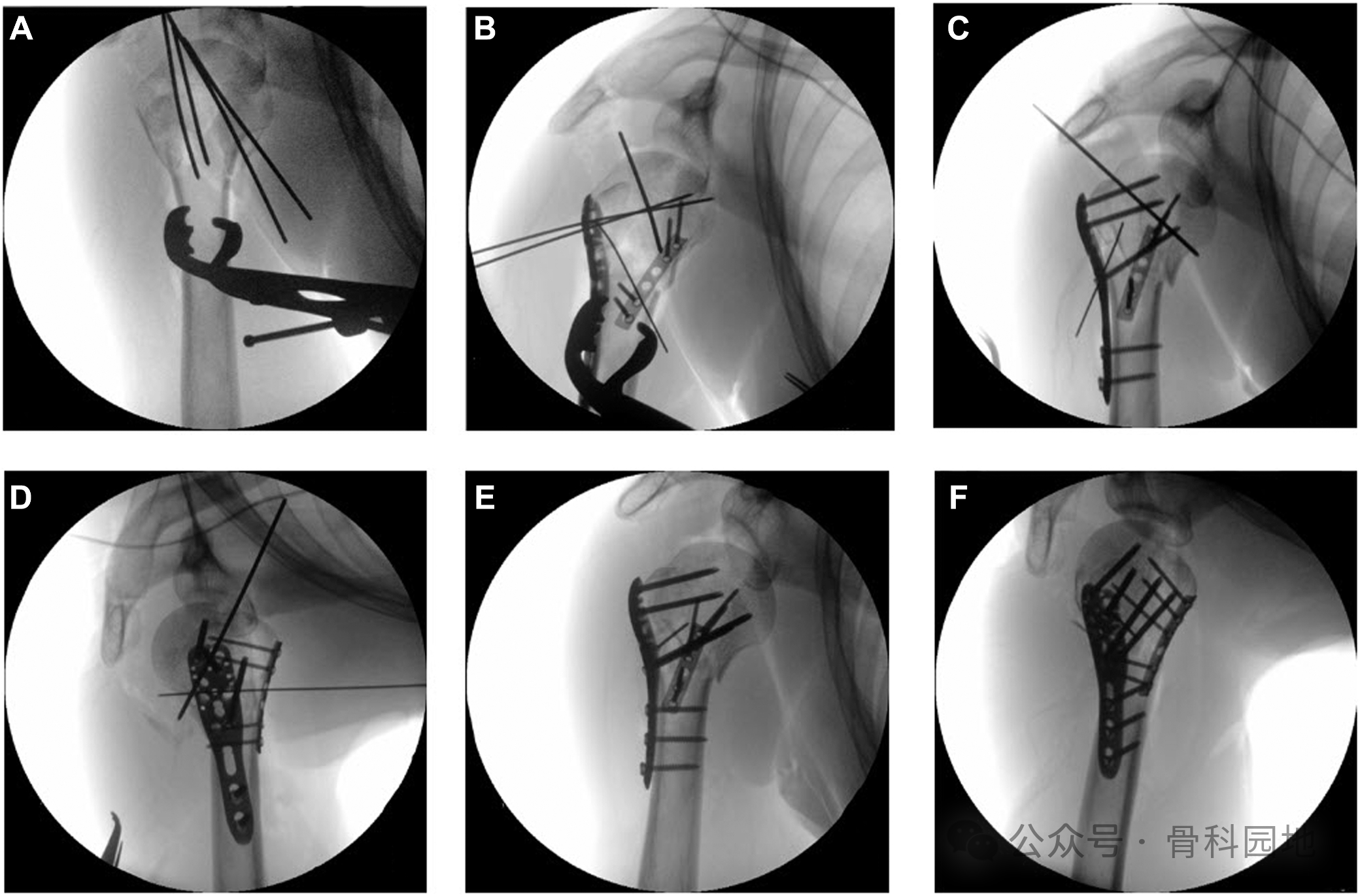
يمكن إدخال أسلاك كيرشنر من اتجاهات مختلفة:
(أ) إعادة ترتيب الكسر يدويًّا مع التثبيت المؤقت بواسطة أسلاك كيرشنر من الاتجاهين السفلي والعلوي.
(ب) تثبيت شظية الحافة الداخلية للعَظم باستخدام لوحة أنبوبية بثلث واحد، مع التثبيت المؤقت للوحة القابضة بواسطة أسلاك كيرشنر.
(ج ود) التثبيت النهائي.
تعتمد هذه التقنية على قدرة الجرّاح على الحفاظ على التثبيت المبدئي أثناء تثبيت الشظايا بواسطة أسلاك كيرشнер قبل التثبيت النهائي. ويساعد إمرار الغرز غير القابلة للامتصاص عبر أوتار الكفة الدورانية وتثبيتها باللوحة في تحقيق التثبيت المبدئي والحفاظ على تثبيت مستقر للنتوءات العظمية.