Scaphoid Fixation Screw - Surgical Implant

Get a Free Quote

Our representative will contact you soon.
Email
Name
Company Name
Message
0/1000

scaphoid fixation screw

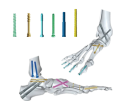
The scaphoid fixation screw is a specialized orthopedic implant designed to treat fractures of the scaphoid bone, one of the eight small carpal bones located in the wrist. This critical bone plays a vital role in wrist stability and mobility, and its fractures are among the most common wrist injuries, particularly in active individuals and athletes. The scaphoid fixation screw provides internal fixation by compressing the fracture fragments together, promoting natural bone healing while maintaining proper alignment. Manufactured from biocompatible materials such as titanium alloy or stainless steel, this medical device features a threaded design that allows surgeons to insert it percutaneously or through open surgical approaches. The primary function of the scaphoid fixation screw is to deliver compression across the fracture site, which accelerates healing and reduces the risk of nonunion, a common complication in scaphoid fractures due to limited blood supply. Technological features include headless or headed designs, cannulated construction for guidewire placement, self-tapping threads, and various diameter and length options to accommodate different patient anatomies. The scaphoid fixation screw is particularly valuable in managing displaced fractures, proximal pole fractures, and cases where conservative treatment has failed. Its applications extend to acute fractures, delayed unions, and established nonunions, offering patients improved functional outcomes and faster return to daily activities compared to traditional casting alone.

New Product Releases

Choosing a scaphoid fixation screw offers significant practical benefits that directly impact patient recovery and surgical outcomes. The primary advantage lies in accelerated bone healing through stable compression at the fracture site, which creates an optimal environment for natural bone regeneration. Unlike prolonged immobilization with casting that can last twelve weeks or longer, internal fixation with a scaphoid fixation screw typically allows for earlier mobilization, reducing stiffness and muscle atrophy while improving overall wrist function. Patients experience shorter recovery times and can return to work and sports activities sooner, translating to reduced lost productivity and improved quality of life. From an operational perspective, the cannulated design simplifies surgical technique, allowing precise placement under fluoroscopic guidance with minimal soft tissue disruption. This minimally invasive approach results in smaller incisions, less postoperative pain, reduced scarring, and lower infection risk compared to traditional open procedures. The biocompatible materials ensure excellent tissue tolerance and long-term stability without causing adverse reactions. Surgeons benefit from versatile application suitability, as the scaphoid fixation screw addresses various fracture patterns including waist fractures, proximal pole injuries, and complex nonunions that resist conservative treatment. The decision to use a scaphoid fixation screw becomes particularly valuable when considering that untreated or inadequately treated scaphoid fractures can lead to debilitating complications such as avascular necrosis, carpal collapse, and early-onset arthritis. The implant's proven track record in clinical studies demonstrates high union rates exceeding ninety percent, making it a reliable solution for both acute injuries and chronic conditions. For healthcare providers, this translates to predictable outcomes, satisfied patients, and reduced need for revision procedures.

Tips And Tricks

HTO Locking Plate: A Precise and Stable Solution for High Knee Joint Osteotomy

13

Jan

HTO Locking Plate: A Precise and Stable Solution for High Knee Joint Osteotomy

High tibial osteotomy represents one of the most effective surgical interventions for treating knee joint disorders, particularly those involving medial compartment osteoarthritis and varus deformity correction. The success of this procedure largely ...
View More
Ankle internal fixation system: Advantages of ankle locking plate in the treatment of complex fractures

06

Mar

Ankle internal fixation system: Advantages of ankle locking plate in the treatment of complex fractures

Complex ankle fractures represent one of the most challenging orthopedic injuries, requiring precise surgical intervention and advanced fixation techniques to restore optimal function and stability. The ankle locking plate has emerged as a revolution...
View More
Cannulated screw system: Technological advancements in the treatment of ankle fractures

06

Mar

Cannulated screw system: Technological advancements in the treatment of ankle fractures

Ankle fractures represent one of the most challenging orthopedic injuries requiring precise surgical intervention and advanced fixation methods. The evolution of fracture treatment has been significantly enhanced by the introduction of modern cannula...
View More
Treatment of osteomyelitis and tibial pseudarthrosis: The advantages of the Ilizarov frame

06

Mar

Treatment of osteomyelitis and tibial pseudarthrosis: The advantages of the Ilizarov frame

The treatment of complex orthopedic conditions such as osteomyelitis and tibial pseudarthrosis presents significant challenges that require innovative surgical approaches. Among the most effective solutions available to orthopedic surgeons today is t...
View More

Get a Free Quote

Our representative will contact you soon.
Email
Name
Company Name
Message
0/1000

scaphoid fixation screw

Advanced Compression Technology for Superior Healing

Advanced Compression Technology for Superior Healing

The scaphoid fixation screw incorporates sophisticated compression technology that fundamentally enhances bone healing outcomes. The threaded design generates controlled axial compression across fracture fragments when the screw is inserted, bringing bone surfaces into intimate contact. This mechanical compression stimulates osteogenesis by creating a stable biological environment where bone cells can proliferate and bridge the fracture gap efficiently. The headless design variants sit flush with the bone surface, eliminating prominence issues that could cause irritation or require hardware removal later. Engineering precision ensures consistent compression forces regardless of bone density variations, accommodating both young patients with robust bone stock and older individuals with osteopenic changes. The self-drilling and self-tapping features reduce surgical time and technical complexity, allowing surgeons to achieve optimal fixation without pre-tapping steps. This technological advantage directly translates to higher union rates, fewer complications, and enhanced patient satisfaction. The compression mechanism also counteracts the natural tendency of fracture fragments to separate under wrist loading, maintaining reduction integrity throughout the critical healing phase. For patients, this means greater confidence in their recovery trajectory and reduced anxiety about fracture displacement or treatment failure.
Minimally Invasive Percutaneous Insertion Capability

Minimally Invasive Percutaneous Insertion Capability

One of the most compelling features of the scaphoid fixation screw is its suitability for percutaneous insertion techniques, representing a paradigm shift from traditional open surgical approaches. The cannulated construction allows the screw to be passed over a guidewire that has been precisely positioned under fluoroscopic imaging, enabling accurate placement through small puncture incisions rather than extensive surgical exposures. This minimally invasive methodology preserves the delicate vascular supply to the scaphoid bone, which is crucial since compromised blood flow is a primary cause of nonunion in these fractures. Patients benefit from significantly reduced surgical trauma, minimal scarring that may be nearly invisible after healing, decreased postoperative pain requiring less narcotic medication, and lower risk of wound complications or infections. The percutaneous approach also facilitates outpatient surgery in many cases, reducing healthcare costs and allowing patients to recover in the comfort of their homes. Surgeons appreciate the reduced operative time and the ability to verify screw position in multiple fluoroscopic views before final insertion, ensuring optimal placement. This technique is particularly advantageous for athletes and manual laborers who require rapid return to full function, as the preserved soft tissue integrity and vascular structures support faster rehabilitation and earlier weight-bearing activities through the wrist.
Versatile Design Options for Personalized Treatment

Versatile Design Options for Personalized Treatment

The scaphoid fixation screw is available in a comprehensive range of design variations, diameters, lengths, and material compositions, enabling surgeons to customize treatment for each patient's unique anatomy and fracture characteristics. Different thread pitch options provide flexibility in achieving ideal compression across various fracture configurations, from simple waist fractures to complex proximal pole injuries. Variable pitch threads generate differential compression that can be optimized for specific fracture patterns, while fully threaded and partially threaded versions accommodate different fixation strategies. Diameter selections typically range from 2.0mm to 4.5mm, allowing appropriate sizing for pediatric patients, small-framed adults, and larger individuals with robust bone structure. Length variability ensures complete scaphoid traversal regardless of bone size, with typical options spanning 14mm to 32mm or longer. Titanium alloy versions offer superior biocompatibility and MRI compatibility for patients requiring future imaging, while stainless steel alternatives provide cost-effective solutions with proven clinical performance. Some advanced systems incorporate cannulation sizes optimized for different guidewire diameters, enhancing surgical precision. This extensive versatility means that orthopedic surgeons can select the ideal scaphoid fixation screw configuration for each clinical scenario, whether treating an acute sports injury in a young athlete or managing a recalcitrant nonunion in an older patient, ensuring optimal biomechanical fixation and maximizing healing potential.
logo