EN
EN

The treatment of complex orthopedic conditions such as osteomyelitis and tibial pseudarthrosis presents significant challenges that require innovative surgical approaches. Among the most effective solutions available to orthopedic surgeons today is the Ilizarov frame, a revolutionary external fixation system that has transformed the management of these difficult cases. This advanced circular fixator system offers unique advantages in addressing bone infections, non-unions, and complex deformity corrections while providing superior stability and enabling gradual correction through distraction osteogenesis principles.
Understanding Osteomyelitis and Its Treatment Challenges
Pathophysiology of Chronic Osteomyelitis
Chronic osteomyelitis represents one of the most challenging conditions in orthopedic surgery, characterized by persistent bone infection that often develops following acute osteomyelitis, trauma, or surgical procedures. The condition involves bacterial colonization of bone tissue, leading to necrosis, sequestrum formation, and compromised vascular supply. Traditional treatment approaches frequently fail due to poor antibiotic penetration into infected bone and the formation of biofilms that protect bacteria from both antibiotics and immune responses.
The management of chronic osteomyelitis requires comprehensive surgical debridement, often resulting in significant bone defects that challenge reconstruction efforts. Conventional internal fixation methods may be inadequate in these cases due to the compromised bone quality and the risk of introducing additional foreign material into an infected environment. The Ilizarov frame addresses these limitations by providing external stabilization while allowing for aggressive debridement and reconstruction.
Surgical Challenges in Infected Bone
Treating infected bone presents multiple surgical challenges that traditional fixation methods struggle to address effectively. The presence of infection compromises bone healing, reduces mechanical strength, and increases the risk of implant failure. Internal fixation devices may serve as niduses for persistent infection, making their use problematic in active osteomyelitis cases. Additionally, the need for radical debridement often creates large bone defects that require complex reconstruction strategies.
The Ilizarov frame offers distinct advantages in managing these challenges by providing stable external fixation without introducing internal hardware into the infected zone. This approach allows surgeons to perform aggressive debridement while maintaining bone alignment and stability. The circular configuration of the frame distributes forces evenly across the bone segment, reducing stress concentrations that could lead to failure or further complications.
Tibial Pseudarthrosis and Non-Union Management
Mechanisms of Pseudarthrosis Development
Tibial pseudarthrosis represents a complex condition where bone healing fails to progress, resulting in persistent fracture gaps or false joint formation. This condition can arise from various factors including infection, inadequate immobilization, poor blood supply, or underlying pathological conditions such as neurofibromatosis. The mechanical environment at the fracture site plays a crucial role in determining healing outcomes, with excessive motion or inadequate compression often preventing proper bone formation.
The Ilizarov frame provides precise control over the mechanical environment at the fracture site, allowing surgeons to create optimal conditions for bone healing. Through controlled compression and distraction techniques, the frame can stimulate osteogenesis while maintaining proper alignment. This approach is particularly valuable in cases where previous treatment attempts have failed, offering a salvage option that can achieve union in challenging scenarios.
Advantages of External Fixation in Non-Unions
External fixation with the Ilizarov frame offers several advantages over internal fixation methods in treating tibial non-unions. The ability to make post-operative adjustments allows for fine-tuning of mechanical conditions without additional surgical procedures. This flexibility is particularly valuable when dealing with complex deformities or when gradual correction is preferred over acute correction. The frame can provide compression at the non-union site while simultaneously correcting angular or rotational deformities.
The minimal invasive nature of percutaneous pin placement reduces surgical trauma and preserves soft tissue vascularity, which is crucial for healing in compromised cases. The Ilizarov frame configuration allows for early weight-bearing, which provides beneficial mechanical stimulation to promote bone healing while maintaining patient mobility and quality of life during treatment.
Technical Advantages of the Ilizarov System
Biomechanical Superiority
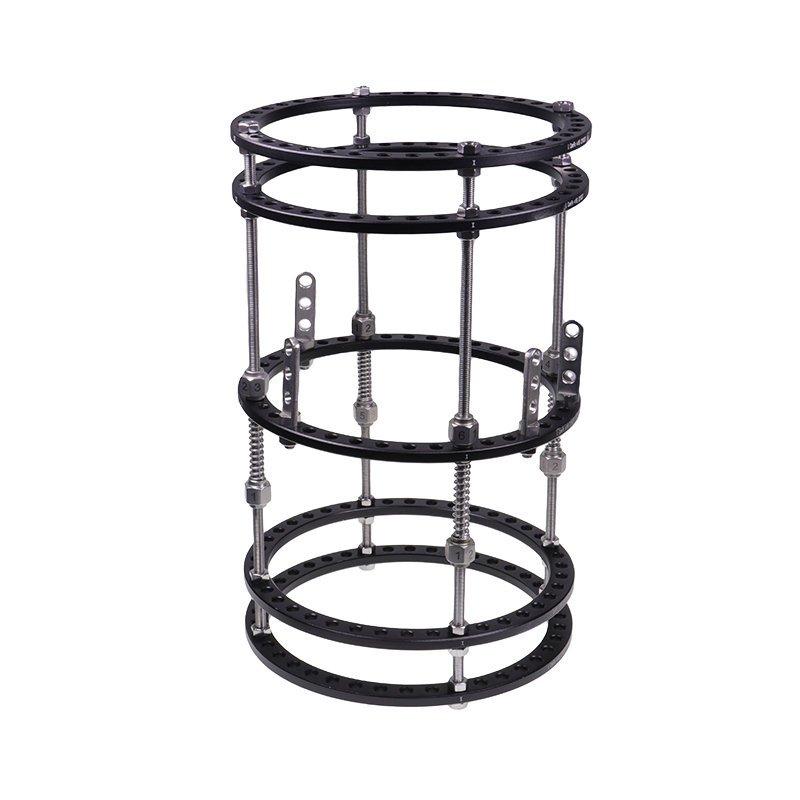
The biomechanical design of the Ilizarov frame represents a significant advancement in external fixation technology. The circular ring configuration distributes applied forces more evenly compared to traditional linear external fixators, reducing stress concentrations that can lead to pin loosening or bone fracture. The tensioned wire system provides superior stability while allowing controlled micromotion that stimulates bone healing according to Wolff's law.
The modular design of the Ilizarov frame enables customization for specific anatomical requirements and pathological conditions. Surgeons can configure the frame to address multiple deformity planes simultaneously while providing stable fixation. The system's ability to apply controlled compression or distraction forces makes it ideal for treating length discrepancies, angular deformities, and complex reconstructive cases that would be difficult to manage with other fixation methods.
Versatility in Clinical Applications
The versatility of the Ilizarov frame extends beyond simple fracture treatment to encompass complex reconstructive procedures. The system can address multiple pathological conditions simultaneously, including infection management, deformity correction, and length restoration. This comprehensive approach reduces the need for multiple surgical procedures and minimizes patient morbidity while achieving superior outcomes.
The frame's ability to facilitate bone transport techniques enables surgeons to fill large bone defects through distraction osteogenesis, eliminating the need for bone grafting in many cases. This capability is particularly valuable when treating post-infectious bone defects where traditional reconstruction methods may fail due to compromised local conditions. The gradual nature of bone transport also allows for soft tissue adaptation, reducing complications associated with acute lengthening procedures.
Clinical Outcomes and Success Rates
Evidence-Based Treatment Results
Clinical studies consistently demonstrate superior outcomes when using the Ilizarov frame for treating complex orthopedic conditions compared to conventional treatment methods. Success rates for achieving union in infected non-unions exceed 90% in most published series, with significant improvements in functional outcomes and patient satisfaction. The ability to simultaneously address infection, deformity, and length discrepancy contributes to these excellent results.
Long-term follow-up studies show sustained benefits from Ilizarov frame treatment, with low rates of re-infection and maintained bone union. The preservation of limb function and the avoidance of amputation in severe cases represent significant advantages that improve patient quality of life and reduce healthcare costs. These outcomes justify the complexity of treatment and the extended treatment periods typically required with the Ilizarov frame system.
Patient Selection and Treatment Planning
Successful outcomes with the Ilizarov frame depend on careful patient selection and comprehensive treatment planning. Ideal candidates include patients with chronic osteomyelitis, complex non-unions, or significant bone defects who have failed previous treatment attempts. Patient compliance and understanding of the treatment process are crucial factors, as the extended treatment period and frame maintenance requirements demand active patient participation.
Pre-operative planning involves detailed assessment of bone quality, soft tissue condition, and deformity patterns to design an appropriate frame configuration. Advanced imaging techniques and computer-assisted planning tools help optimize frame assembly and predict treatment outcomes. The multidisciplinary approach involving orthopedic surgeons, infectious disease specialists, and rehabilitation professionals ensures comprehensive patient care throughout the treatment process.
Surgical Technique and Frame Application
Pre-operative Preparation
Successful application of the Ilizarov frame begins with thorough pre-operative preparation and surgical planning. Detailed imaging studies including CT scans and MRI help define the extent of pathology and guide frame configuration decisions. Laboratory studies and bone biopsy may be necessary to identify causative organisms in cases of osteomyelitis, enabling targeted antibiotic therapy.
The surgical approach must balance the need for adequate exposure with preservation of soft tissue vascularity. In cases of chronic osteomyelitis, aggressive debridement is essential to remove all necrotic and infected tissue, even if this creates significant bone defects. The Ilizarov frame provides the stability necessary to maintain alignment during healing while allowing for reconstruction of large defects through bone transport or other techniques.
Frame Assembly and Wire Placement
Proper frame assembly and wire placement are critical for achieving optimal outcomes with the Ilizarov frame system. The placement of tensioned wires follows specific anatomical principles to avoid neurovascular structures while achieving maximum bone purchase. The use of image guidance and anatomical landmarks ensures safe wire placement and reduces the risk of complications.
The frame assembly must be configured to address the specific pathology while allowing for planned corrections or bone transport procedures. Ring positioning, connecting rod orientation, and hinge placement all influence the mechanical properties of the construct and the ability to achieve treatment goals. Post-operative adjustability allows for fine-tuning of the correction process based on clinical and radiographic monitoring.
Post-operative Management and Patient Care
Infection Prevention and Frame Maintenance
Post-operative management of patients with Ilizarov frame applications requires vigilant attention to infection prevention and frame maintenance. Pin site care protocols are essential for preventing superficial infections that could progress to deeper structures. Regular cleaning with appropriate antiseptic solutions and monitoring for signs of infection help maintain pin site health throughout the treatment period.
Frame maintenance involves regular inspection of all components to ensure proper tension and alignment. Wire tension may require adjustment over time as tissues adapt to the fixation, and connecting rods may need modification to accommodate planned corrections. Patient education regarding frame care and recognition of potential complications is crucial for successful treatment outcomes.
Rehabilitation and Functional Recovery
The rehabilitation process during Ilizarov frame treatment focuses on maintaining joint mobility and muscle strength while protecting the healing bone. Early weight-bearing is often encouraged as it provides beneficial mechanical stimulation for bone healing. Physical therapy protocols must be adapted to accommodate the presence of the external frame while promoting optimal functional outcomes.
Gradual progression of activities and careful monitoring of bone healing guide the rehabilitation process. The extended treatment period requires ongoing motivation and support to maintain patient compliance with therapy protocols. Successful rehabilitation during frame treatment sets the foundation for optimal long-term functional outcomes following frame removal.
Complications and Management Strategies
Common Complications and Prevention
While the Ilizarov frame offers significant advantages in treating complex orthopedic conditions, potential complications must be recognized and managed appropriately. Pin site infections represent the most common complication, occurring in varying degrees from superficial irritation to deep infection. Early recognition and appropriate treatment with local care and antibiotics can prevent progression to more serious complications.
Mechanical complications such as wire breakage, pin loosening, or frame instability can compromise treatment outcomes if not addressed promptly. Regular clinical and radiographic monitoring helps identify these issues early, allowing for timely intervention. The modular design of the Ilizarov frame facilitates component replacement without compromising the overall stability of the construct.
Long-term Follow-up Considerations
Long-term follow-up after Ilizarov frame treatment involves monitoring for sustained bone union, functional outcomes, and potential late complications. Serial radiographs confirm maintained bone healing and detect any evidence of re-infection or hardware-related problems. Functional assessment tools help quantify improvements in mobility, pain levels, and overall quality of life.
The timing of frame removal requires careful consideration of bone healing quality and patient factors. Premature removal may result in loss of correction or failure of union, while delayed removal increases the risk of complications and patient discomfort. Clinical and radiographic criteria guide the decision-making process to optimize outcomes while minimizing treatment duration.
Future Developments and Innovations
Technological Advances in External Fixation
Ongoing developments in external fixation technology continue to enhance the capabilities and applications of the Ilizarov frame system. Advanced materials science has led to stronger, lighter frame components that reduce patient burden while maintaining mechanical properties. Smart fixation systems incorporating sensors and feedback mechanisms may enable real-time monitoring of healing progress and automatic adjustment of mechanical conditions.
Computer-assisted design and manufacturing techniques allow for patient-specific frame configurations that optimize biomechanical properties for individual cases. Three-dimensional printing technology enables rapid prototyping of custom components and may facilitate intraoperative modifications to address unexpected findings or complications. These advances promise to further improve outcomes while reducing treatment complexity and duration.
Integration with Regenerative Medicine
The integration of regenerative medicine principles with Ilizarov frame treatment offers exciting possibilities for enhanced bone healing and reconstruction. Biological augmentation using stem cells, growth factors, or tissue engineering approaches may accelerate healing processes and improve outcomes in challenging cases. The controlled mechanical environment provided by the frame creates ideal conditions for biological enhancement strategies.
Future developments may include bioactive frame coatings that deliver therapeutic agents directly to the treatment site or integrated drug delivery systems that provide sustained antimicrobial therapy. These innovations could further reduce infection rates and improve healing outcomes while maintaining the mechanical advantages of the current system.
FAQ
How long does treatment with an Ilizarov frame typically take
Treatment duration with an Ilizarov frame varies significantly depending on the specific condition being treated and patient factors. For simple fracture healing, the frame may be required for 3-6 months, while complex cases involving bone transport or infection management may require 12-18 months or longer. The gradual nature of correction and healing cannot be rushed, as premature frame removal may result in loss of correction or treatment failure.
What are the main advantages of Ilizarov frame over internal fixation
The Ilizarov frame offers several key advantages over internal fixation methods, including the ability to make post-operative adjustments without additional surgery, superior infection management through external stabilization, and the capability to address complex deformities through gradual correction. The system also allows for early weight-bearing and provides excellent stability while preserving soft tissue vascularity through minimal invasive techniques.
Can patients return to normal activities while wearing an Ilizarov frame
Patients can maintain many normal daily activities while wearing an Ilizarov frame, though some modifications may be necessary. Weight-bearing is often encouraged as it promotes bone healing, and most patients can walk with appropriate assistive devices. Activities requiring significant frame manipulation or those that risk damage to the apparatus should be avoided. Swimming and certain sports may be restricted, but most occupational and basic recreational activities can continue with proper precautions.
What follow-up care is required after Ilizarov frame removal
Follow-up care after frame removal includes regular clinical and radiographic monitoring to ensure maintained bone healing and detect any potential complications. Physical therapy may be intensified to restore full range of motion and strength. Patients typically require gradual return to full activities over several weeks to months, depending on the complexity of their treatment. Long-term follow-up extends for at least one year to monitor for any late complications or loss of correction.
Table of Contents
- Understanding Osteomyelitis and Its Treatment Challenges
- Tibial Pseudarthrosis and Non-Union Management
- Technical Advantages of the Ilizarov System
- Clinical Outcomes and Success Rates
- Surgical Technique and Frame Application
- Post-operative Management and Patient Care
- Complications and Management Strategies
- Future Developments and Innovations
- FAQ