K Wire Ortho: Surgical Fixation Solutions

Get a Free Quote

Our representative will contact you soon.
Email
Name
Company Name
Message
0/1000

k wire ortho

The k wire ortho is a specialized surgical instrument widely used in orthopedic procedures for fracture fixation and bone stabilization. This precision-engineered wire provides surgeons with a reliable solution for temporary or permanent internal fixation during reconstructive and trauma surgeries. The k wire ortho features a smooth, thin stainless steel construction that allows for minimal tissue disruption while maintaining excellent mechanical strength. Available in various diameters ranging from 0.6mm to 3.0mm, these wires accommodate different surgical requirements across multiple anatomical locations. The primary functions include skeletal traction, bone fragment alignment, joint stabilization, and serving as a guide for cannulated screw placement. Technologically, the k wire ortho incorporates a sharp trocar tip design that facilitates easy insertion through bone cortex with minimal force. The wire's uniform diameter ensures consistent drilling performance and reduces the risk of wire breakage during insertion or removal. Surface treatments enhance biocompatibility and reduce friction during penetration. Applications span fracture management in hand surgery, foot and ankle procedures, pediatric orthopedics, maxillofacial reconstruction, and small bone fixation. The k wire ortho proves particularly valuable in treating distal radius fractures, metacarpal and phalangeal fractures, calcaneal fractures, and complex joint reconstructions. Its versatility extends to both open reduction internal fixation and percutaneous pinning techniques, making it an indispensable tool in modern orthopedic practice for achieving optimal bone healing outcomes.

New Products

Choosing the k wire ortho delivers substantial practical benefits that directly impact surgical outcomes and patient recovery. The straightforward insertion technique requires minimal surgical training, allowing practitioners to perform procedures efficiently while reducing operation time significantly. This time-saving aspect translates to lower anesthesia exposure for patients and increased surgical throughput for medical facilities. The k wire ortho offers exceptional cost-effectiveness compared to more complex fixation systems, making advanced orthopedic care accessible without compromising quality. Its simple design eliminates the need for expensive instrumentation sets, reducing upfront investment and maintenance costs for healthcare providers. From an operational perspective, the k wire ortho provides unmatched flexibility in surgical planning. Surgeons can easily adjust wire placement intraoperatively based on real-time assessment, something rigid plate systems cannot offer. The minimal invasive footprint means smaller incisions, less soft tissue damage, and reduced post-operative pain for patients. Recovery times typically decrease because the k wire ortho creates less surgical trauma compared to bulkier fixation devices. The wire's small diameter preserves blood supply to healing bone, promoting faster union rates. Application suitability extends across patient demographics, from pediatric cases requiring temporary growth-friendly fixation to elderly patients needing gentle stabilization. The k wire ortho excels in emergency settings where rapid stabilization is critical, as it can be quickly inserted under fluoroscopic guidance without extensive surgical exposure. Its compatibility with standard power drills and hand insertion techniques provides operational adaptability in various clinical environments. The ease of removal after healing completes represents another practical advantage, often requiring only local anesthesia in outpatient settings. Decision-makers appreciate that the k wire ortho maintains proven reliability across decades of clinical use, with extensive medical literature supporting its safety profile and effectiveness in diverse orthopedic applications.

Practical Tips

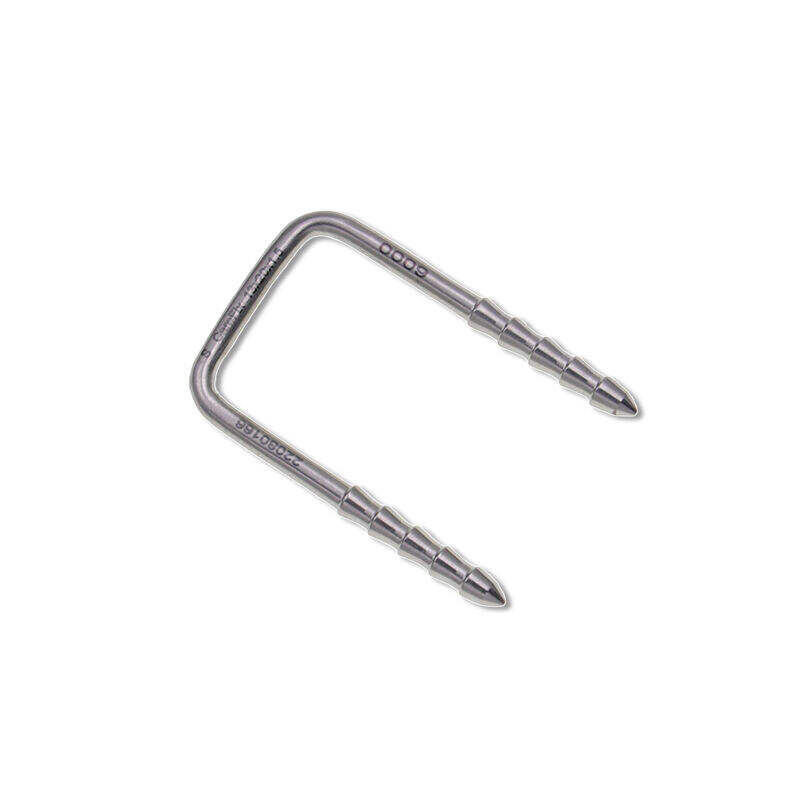
U-shaped nail: technical advantage of ankle surgery

13

Jan

U-shaped nail: technical advantage of ankle surgery

Modern orthopedic surgery has witnessed remarkable advancement in fixation techniques, particularly in the treatment of complex ankle and distal tibial fractures. The distal tibial interlocking intramedullary nail represents a significant breakthroug...
View More
Taylor brace: a new choice for minimally invasive treatment of complex fracture repair

11

Feb

Taylor brace: a new choice for minimally invasive treatment of complex fracture repair

The Taylor brace represents a significant advancement in orthopedic trauma management, offering surgeons and patients a minimally invasive alternative for treating complex fracture repairs. This innovative external fixation system has transformed the...
View More
Ankle internal fixation system: Advantages of ankle locking plate in the treatment of complex fractures

06

Mar

Ankle internal fixation system: Advantages of ankle locking plate in the treatment of complex fractures

Complex ankle fractures represent one of the most challenging orthopedic injuries, requiring precise surgical intervention and advanced fixation techniques to restore optimal function and stability. The ankle locking plate has emerged as a revolution...
View More
Distal radial volar locking plate: refined design enhances the success rate of fracture fixation

06

Mar

Distal radial volar locking plate: refined design enhances the success rate of fracture fixation

The treatment of distal radius fractures has undergone significant evolution in recent decades, with the distal radial volar locking plate emerging as a cornerstone technology in modern orthopedic practice. These innovative implants represent a parad...
View More

Get a Free Quote

Our representative will contact you soon.
Email
Name
Company Name
Message
0/1000

k wire ortho

Precision Engineering for Optimal Bone Penetration

Precision Engineering for Optimal Bone Penetration

The k wire ortho incorporates advanced manufacturing techniques that create a perfectly balanced surgical instrument designed for seamless bone penetration. The trocar tip geometry undergoes precision grinding to achieve an optimal cutting angle that requires minimal insertion force while maintaining directional stability. This engineering excellence means surgeons experience smooth advancement through both cortical and cancellous bone without the chatter or binding that occurs with inferior products. The uniform shaft diameter, maintained within strict tolerances, ensures consistent performance throughout the entire wire length. This precision prevents unexpected wire bending or breakage during insertion, complications that can compromise surgical outcomes and extend procedure times. The surface finish receives special attention through electropolishing processes that create a micro-smooth exterior, reducing friction coefficients and tissue adhesion. For practitioners, this translates to easier wire removal when fixation is no longer needed, minimizing patient discomfort during extraction procedures. The metallurgical composition utilizes medical-grade stainless steel alloys specifically selected for their combination of tensile strength, flexibility, and corrosion resistance, ensuring the k wire ortho maintains structural integrity throughout the healing period while resisting body fluid degradation.
Versatile Diameter Options for Every Surgical Scenario

Versatile Diameter Options for Every Surgical Scenario

The k wire ortho system offers a comprehensive range of diameter options that enable surgeons to select the ideal wire size for each unique clinical situation. Smaller diameter wires, typically 0.6mm to 1.2mm, excel in delicate procedures involving pediatric bones, small hand bones, or thin cortical structures where minimizing damage is paramount. These fine wires provide adequate stabilization while preserving maximal bone stock and vascular supply. Mid-range diameters from 1.5mm to 2.0mm represent the workhorses of orthopedic fixation, suitable for most adult fracture patterns in hands, wrists, and feet. These sizes deliver optimal balance between mechanical strength and ease of insertion. Larger diameter options extending to 3.0mm address demanding applications requiring enhanced rigidity, such as temporary skeletal traction, large bone fragment stabilization, or situations where wires must span significant distances. This diameter versatility allows the k wire ortho to serve as the primary fixation method or as an adjunct to other stabilization techniques. Surgeons can employ multiple wires of varying diameters within a single procedure to address different biomechanical requirements at various fracture sites, creating customized fixation constructs tailored to individual patient anatomy and injury patterns.
Universal Compatibility Across Surgical Environments

Universal Compatibility Across Surgical Environments

The k wire ortho demonstrates remarkable compatibility with existing surgical equipment and techniques, eliminating the need for specialized instrumentation investments. Standard orthopedic power drills accept these wires through universal chuck systems, allowing immediate integration into current surgical workflows. Hand insertion using dedicated wire drivers remains equally effective for situations requiring tactile feedback or when powered equipment is unavailable. This dual-mode capability proves invaluable in resource-limited settings, emergency departments, or field hospitals where comprehensive surgical infrastructure may not exist. The k wire ortho works seamlessly with fluoroscopic guidance systems, providing excellent radiographic visibility that enables precise placement verification without image distortion. Compatibility extends to various surgical approaches, whether surgeons prefer percutaneous techniques that minimize soft tissue disruption or open procedures requiring direct fracture visualization. The wire's standardized dimensions ensure reliable performance with cannulated instrument sets, allowing its use as a guide wire for over-drilling techniques or cannulated screw placement. This universal compatibility reduces the learning curve for surgical teams transitioning between different fixation methods and enables healthcare facilities to maintain streamlined inventory systems. The k wire ortho integrates effortlessly into both traditional surgical protocols and modern minimally invasive procedures, supporting diverse surgical philosophies while maintaining consistent performance standards.
logo