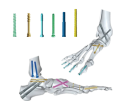
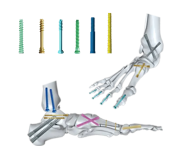
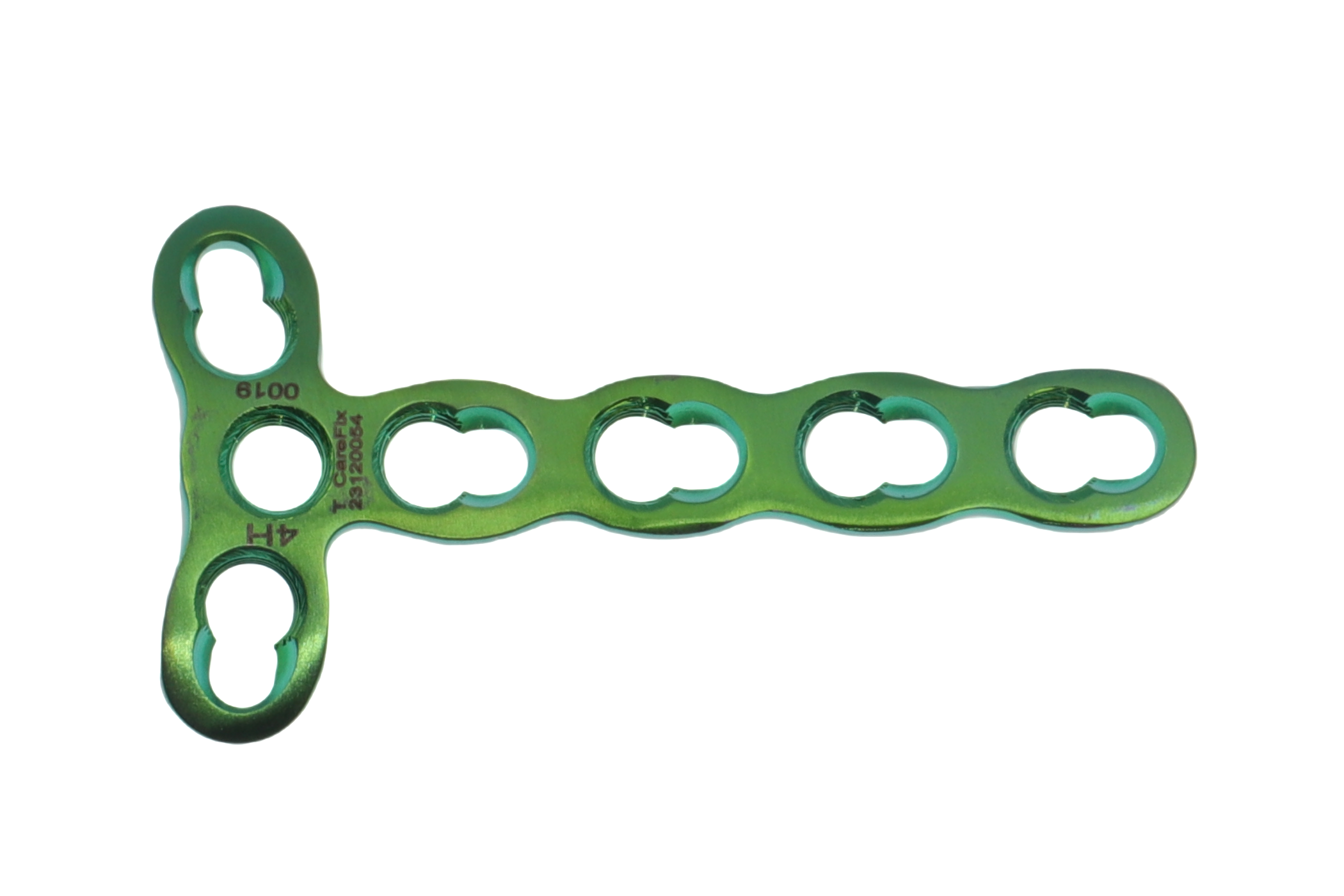
Lateral Malleolus Locking Plate Solutions

Get a Free Quote

Our representative will contact you soon.
Email
Name
Company Name
Message
0/1000

lateral malleolus locking plate

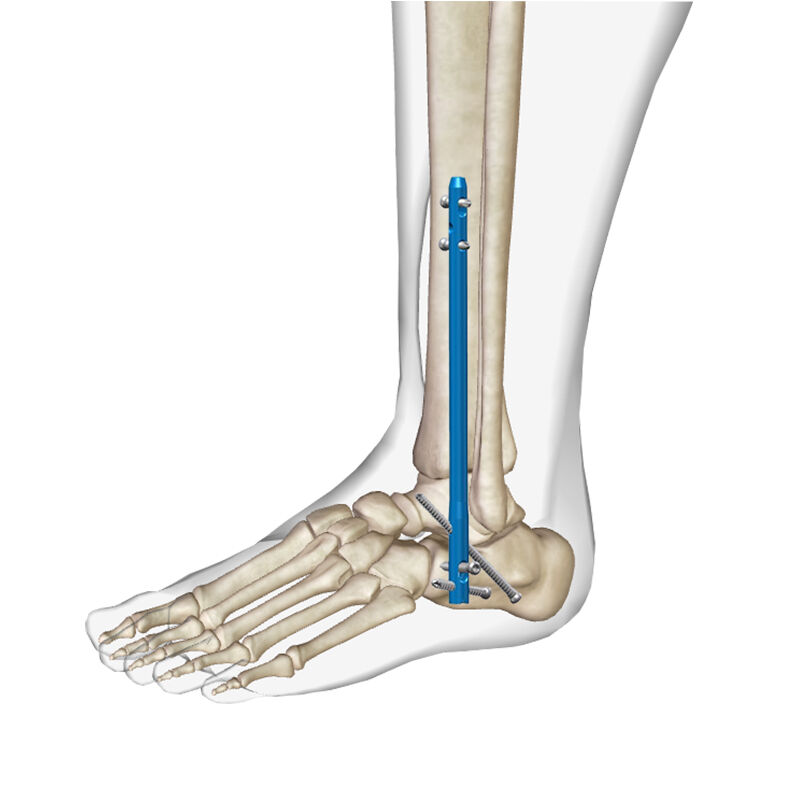
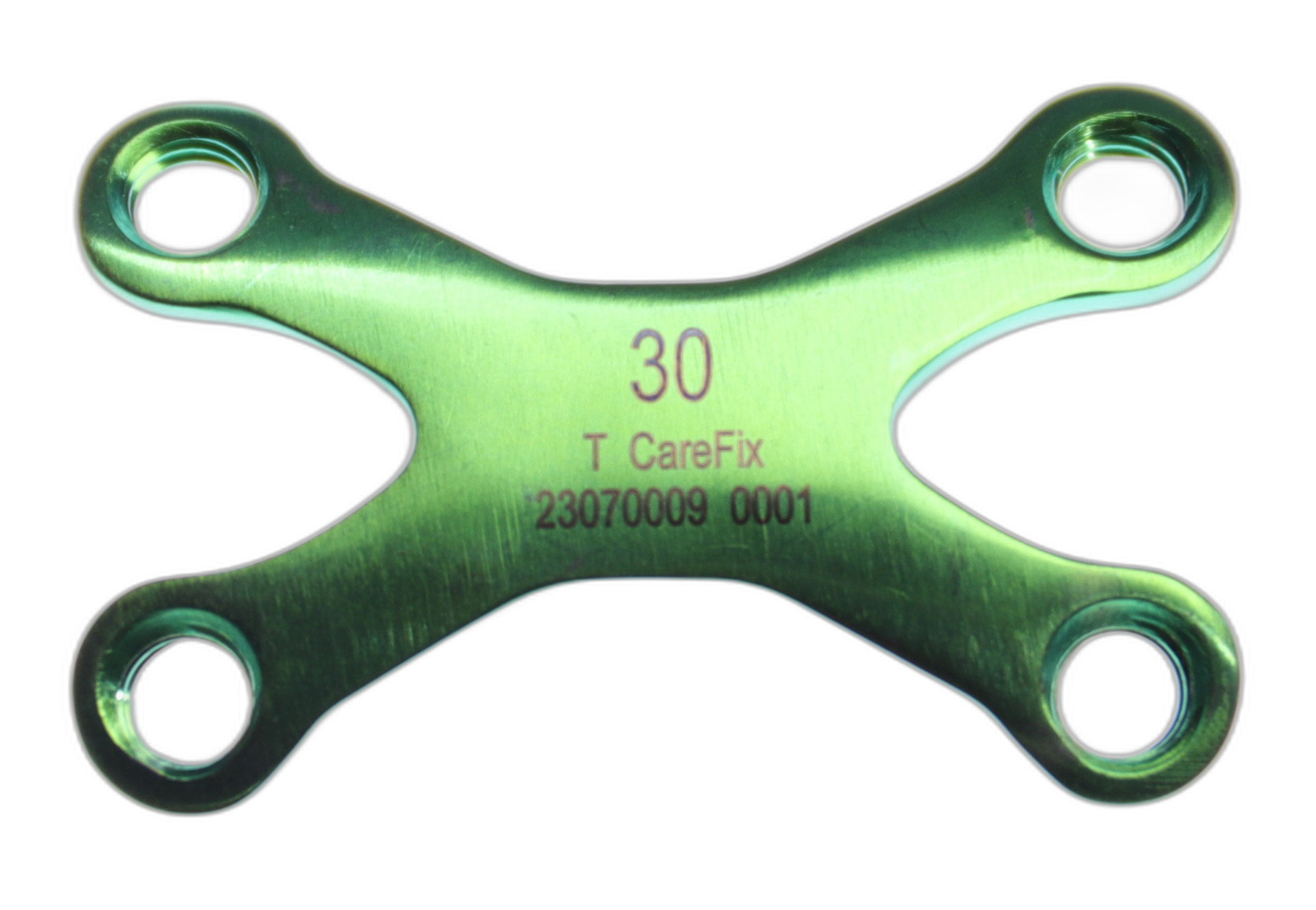
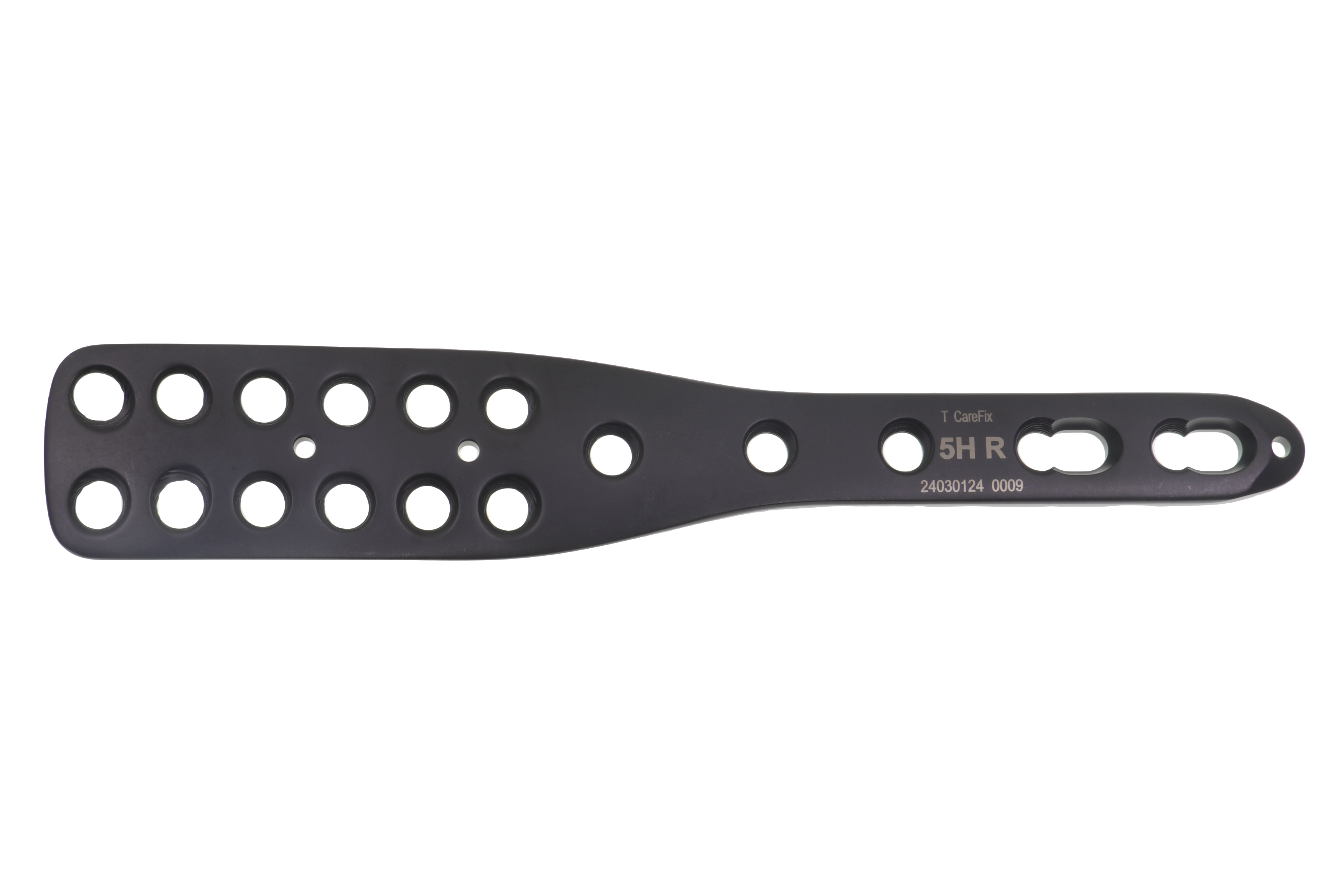
The lateral malleolus locking plate is an advanced orthopedic implant specifically designed for the surgical fixation of lateral malleolar fractures at the ankle. This specialized plate provides stable fixation through its anatomically contoured design that matches the natural shape of the fibula's distal end. The lateral malleolus locking plate incorporates multiple screw holes that accept locking screws, creating a fixed-angle construct that enhances stability and promotes optimal bone healing. Its primary function is to secure fractured bone fragments in their correct anatomical position while allowing early mobilization and reducing the risk of hardware failure. The plate is manufactured from high-grade titanium alloy or stainless steel, ensuring biocompatibility and sufficient strength to withstand physiological loads during the healing process. Technological features include low-profile construction to minimize soft tissue irritation, precise screw trajectory guidance, and angular stability that prevents screw loosening. The lateral malleolus locking plate is particularly effective in cases involving osteoporotic bone, comminuted fractures, or when traditional compression plating techniques may not provide adequate stability. Its applications extend to various fracture patterns including Weber A, B, and C classifications, making it a versatile solution for ankle trauma reconstruction. Surgeons appreciate the reproducible outcomes and the ability to achieve anatomical reduction with this fixation system. The plate's design allows for both locking and non-locking screw options, providing flexibility during surgical procedures. This advanced implant has become an essential tool in modern orthopedic surgery, offering reliable fixation that supports patient recovery and return to normal activities.

Popular Products

The lateral malleolus locking plate delivers significant practical benefits that directly impact patient outcomes and surgical efficiency. First, the angular stability provided by the locking mechanism eliminates the need for precise bone-plate compression, which is particularly valuable when treating patients with compromised bone quality such as elderly individuals with osteoporosis. This feature ensures that the fixation remains secure even when bone density is suboptimal, reducing the risk of screw pullout and subsequent loss of reduction. The anatomically pre-contoured design saves valuable operating time as it requires minimal intraoperative bending, allowing surgeons to achieve proper fit quickly and focus on precise fracture reduction. Patients benefit from the low-profile construction of the lateral malleolus locking plate, which minimizes hardware prominence under the skin and reduces the likelihood of soft tissue complications or the need for subsequent implant removal. The versatility of the system allows treatment of various fracture complexities through a single platform, making inventory management more efficient for healthcare facilities while ensuring availability when needed. Early weight-bearing protocols become possible due to the robust stability achieved, which accelerates rehabilitation and helps patients return to daily activities sooner. The biocompatible materials used minimize adverse tissue reactions and support long-term implant integration. From an operational perspective, the standardized instrumentation and straightforward surgical technique reduce the learning curve for surgeons and minimize procedure duration. Healthcare providers value the predictable clinical results and lower complication rates associated with this technology. The lateral malleolus locking plate represents a cost-effective solution when considering reduced revision rates and improved patient satisfaction, making it a sound investment for orthopedic practices seeking to enhance their fracture care capabilities while delivering superior outcomes.

Tips And Tricks

Application analysis of intramedullary nail system in ankle joint fusion

16

Dec

Application analysis of intramedullary nail system in ankle joint fusion

The evolution of orthopedic surgical techniques has brought significant advancements in treating complex ankle pathologies, particularly through the implementation of modern fixation systems. An intramedullary nail system represents a revolutionary a...
View More
HTO Locking Plate: A Precise and Stable Solution for High Knee Joint Osteotomy

13

Jan

HTO Locking Plate: A Precise and Stable Solution for High Knee Joint Osteotomy

High tibial osteotomy represents one of the most effective surgical interventions for treating knee joint disorders, particularly those involving medial compartment osteoarthritis and varus deformity correction. The success of this procedure largely ...
View More
Cannulated screw system: Technological advancements in the treatment of ankle fractures

06

Mar

Cannulated screw system: Technological advancements in the treatment of ankle fractures

Ankle fractures represent one of the most challenging orthopedic injuries requiring precise surgical intervention and advanced fixation methods. The evolution of fracture treatment has been significantly enhanced by the introduction of modern cannula...
View More
Taylor brace: a new choice for minimally invasive treatment of complex fracture repair

15

Apr

Taylor brace: a new choice for minimally invasive treatment of complex fracture repair

The Taylor brace represents a significant advancement in orthopedic external fixation technology, offering surgeons and patients a minimally invasive solution for complex fracture repair scenarios. This innovative Taylor brace system combines precisi...
View More

Get a Free Quote

Our representative will contact you soon.
Email
Name
Company Name
Message
0/1000

lateral malleolus locking plate

Angular Stability Technology for Superior Fixation

Angular Stability Technology for Superior Fixation

The lateral malleolus locking plate features advanced angular stability technology that fundamentally changes how fracture fixation is achieved. Unlike conventional plates that rely on friction between the plate and bone, the locking mechanism creates a fixed-angle construct where screws lock into the plate itself, forming a unified structure that functions as an internal fixator. This technology provides critical advantages in challenging clinical scenarios where bone quality is compromised or fracture patterns are complex. The locked screw-plate interface distributes forces more evenly across the construct, preventing the concentration of stress at individual screw sites that could lead to loosening or failure. This characteristic makes the lateral malleolus locking plate especially valuable for elderly patients or those with metabolic bone disease, where traditional fixation methods often prove inadequate. Surgeons can achieve consistent stability regardless of bone density variations, eliminating concerns about inadequate purchase that plague conventional screws. The angular stability also maintains fracture reduction throughout the healing period, even under physiological loading conditions, which supports proper bone alignment and reduces malunion risks. This innovative technology has transformed treatment protocols, enabling more confident surgical interventions and expanding treatment options for previously challenging fracture presentations.
Anatomical Contouring for Optimal Fit and Comfort

Anatomical Contouring for Optimal Fit and Comfort

The anatomically contoured profile of the lateral malleolus locking plate represents precision engineering based on extensive anatomical studies of the distal fibula. This pre-shaped design follows the natural curvature and dimensions of the lateral malleolar region, ensuring intimate bone contact without requiring extensive intraoperative manipulation. The benefits extend beyond surgical convenience to directly impact patient comfort and clinical outcomes. The precise anatomical fit reduces gaps between the plate and bone surface, which minimizes movement at the fracture site and creates an environment conducive to healing. The low-profile design considers the limited soft tissue coverage typical of the lateral ankle region, positioning the plate to minimize subcutaneous prominence that could cause discomfort or skin complications. Patients experience fewer irritation symptoms and reduced need for hardware removal procedures, which represent additional surgeries with associated costs and recovery time. The contoured shape also facilitates proper screw positioning along optimal trajectories, enhancing fixation strength while avoiding critical neurovascular structures. This thoughtful design reduces surgical complexity, shortens procedure times, and contributes to more predictable outcomes. The lateral malleolus locking plate demonstrates how anatomical precision in implant design translates directly into clinical value, combining surgical efficiency with patient-centered benefits that enhance overall treatment success.
Versatile Application Across Fracture Patterns

Versatile Application Across Fracture Patterns

The lateral malleolus locking plate offers exceptional versatility in addressing diverse fracture patterns and patient presentations, making it an indispensable tool for comprehensive ankle trauma management. This adaptability stems from the plate's multiple screw hole configurations that accommodate both locking and non-locking screws, allowing surgeons to customize fixation strategies based on specific fracture characteristics and bone quality. Simple transverse fractures, complex comminuted patterns, and oblique fracture lines can all be effectively treated using this single platform, eliminating the need for multiple specialized implants. The versatility extends to treating fractures across the Weber classification system, from infradesmal to supradesmal injuries, providing consistent fixation principles regardless of fracture level. Surgeons can employ compression techniques where beneficial while utilizing angular stability where bone quality demands it, combining the best aspects of different fixation philosophies within one construct. This flexibility proves particularly valuable in managing fractures with associated syndesmotic injuries or in revision scenarios where previous fixation has failed. The lateral malleolus locking plate accommodates various patient anatomies and fracture complexities without compromising fixation quality, streamlining surgical planning and inventory requirements. Healthcare facilities benefit from reduced implant variety while maintaining capability to address the full spectrum of lateral malleolar injuries, optimizing resource allocation without limiting treatment options.
logo