PEEK Cervical Cage - Advanced Spinal Fusion

Get a Free Quote

Our representative will contact you soon.
Email
Name
Company Name
Message
0/1000

peek cervical cage

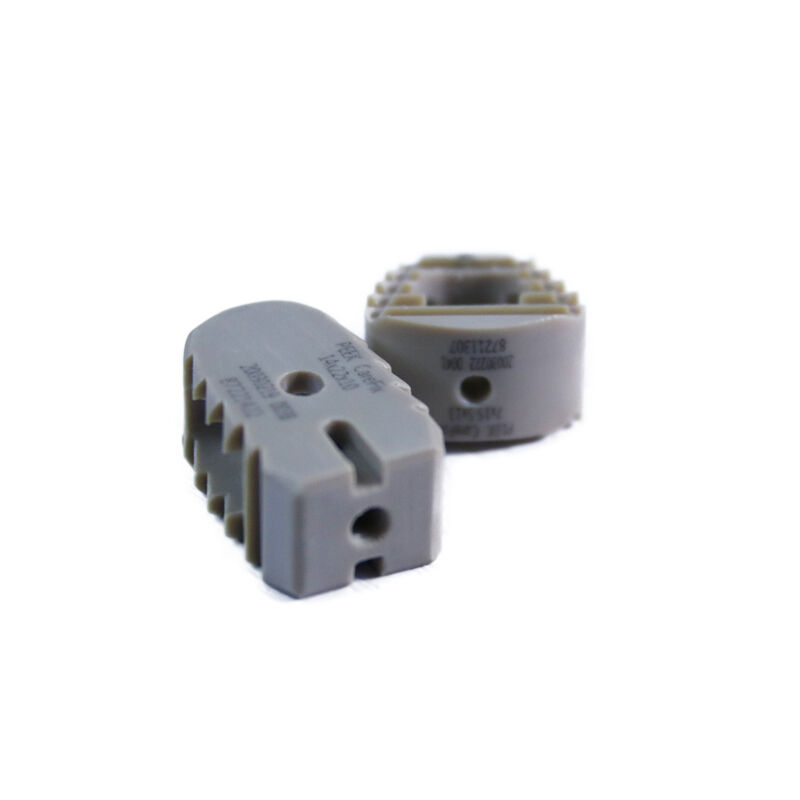
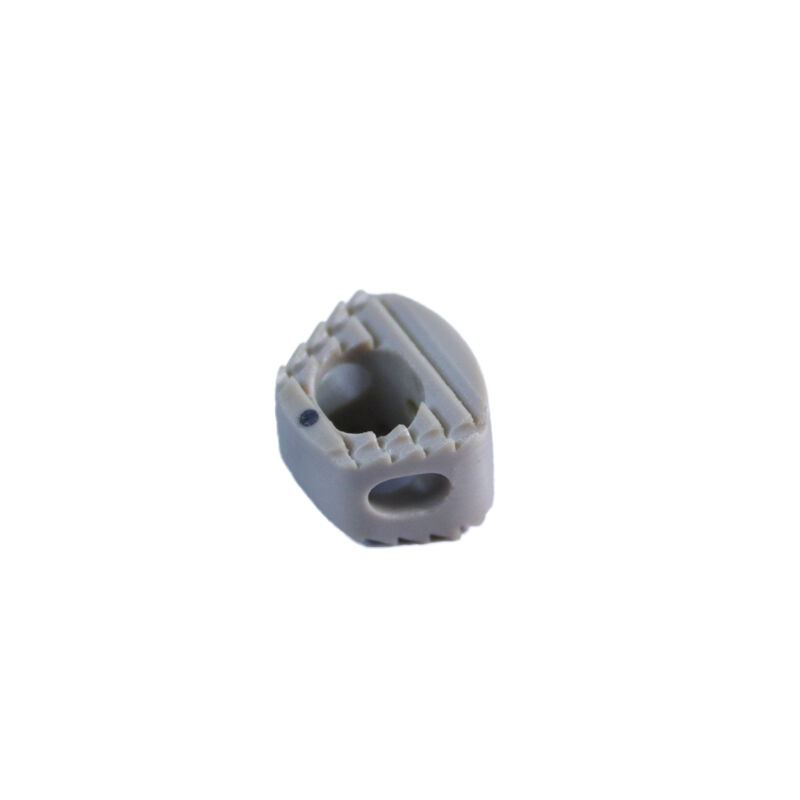
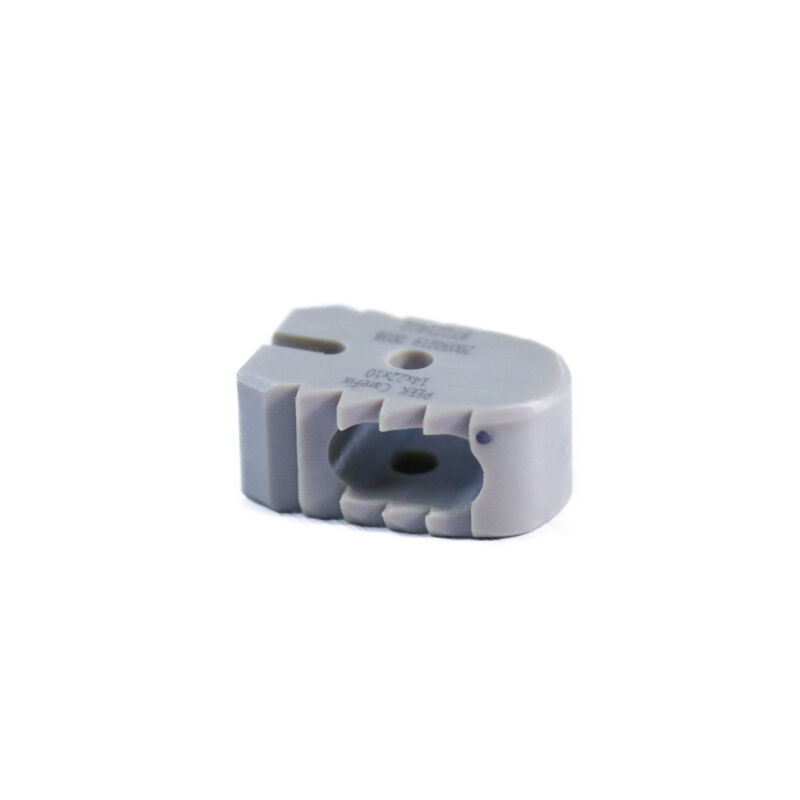
The peek cervical cage is an advanced spinal implant device designed to restore vertebral height and stability in cervical spine fusion procedures. Manufactured from polyetheretherketone (PEEK), this biocompatible implant serves as a spacer between cervical vertebrae following disc removal or decompression surgery. The peek cervical cage provides structural support while promoting natural bone growth through its specially designed architecture. This medical device features a radiolucent construction that allows surgeons to monitor fusion progress through standard imaging techniques without metal-induced artifacts. The peek cervical cage incorporates anatomically contoured surfaces that match the natural curvature of cervical vertebrae, ensuring optimal fit and load distribution. Its porous structure or surface modifications encourage bone ingrowth, facilitating solid fusion between adjacent vertebrae. Surgeons utilize the peek cervical cage in anterior cervical discectomy and fusion procedures, where damaged discs are removed and replaced with the implant to maintain proper spacing and alignment. The device comes in various heights, footprints, and lordotic angles to accommodate different patient anatomies and surgical requirements. The peek cervical cage represents a significant advancement in spinal surgery technology, offering superior biomechanical properties compared to traditional materials. Its elastic modulus closely resembles natural bone, reducing stress shielding effects that can compromise fusion outcomes. This implant solution addresses degenerative disc disease, herniated discs, spinal stenosis, and traumatic injuries affecting the cervical spine, providing patients with restored function and pain relief.

Popular Products

Choosing a peek cervical cage delivers multiple practical benefits that directly impact surgical outcomes and patient recovery. The biocompatibility of PEEK material minimizes rejection risks and adverse tissue reactions, creating a safer healing environment for patients undergoing cervical fusion procedures. Unlike metal implants, the peek cervical cage eliminates concerns about allergic responses to materials like titanium or cobalt-chromium alloys. The radiolucent property provides surgeons with clear postoperative imaging capabilities, enabling accurate assessment of bone fusion progress without interference from metal artifacts on X-rays, CT scans, or MRI examinations. This transparency helps medical teams make informed decisions about patient progress and detect potential complications early. The mechanical properties of the peek cervical cage closely match natural bone stiffness, promoting more physiological load transfer across the fusion site and reducing subsidence risks into adjacent vertebrae. This biomechanical compatibility supports faster, more reliable fusion rates compared to overly rigid metal alternatives. Patients benefit from shorter hospital stays and quicker returns to daily activities because the peek cervical cage facilitates natural healing processes. The device's anatomical design ensures proper cervical alignment and disc height restoration, addressing pain sources while maintaining neck mobility in non-fused segments. Surgical teams appreciate the versatility of peek cervical cage systems, with multiple size options allowing precise matching to individual patient anatomy and pathology. The material's durability ensures long-term stability without degradation, while its proven track record in thousands of successful procedures provides confidence for both surgeons and patients. Cost-effectiveness emerges from reduced complication rates, fewer revision surgeries, and improved clinical outcomes that translate to better quality of life for patients and lower overall healthcare expenses.

Tips And Tricks

Evolution of Intervertebral Fusion Device Materials: Clinical Efficacy Comparison between PEEK and Titanium Alloy

13

Jan

Evolution of Intervertebral Fusion Device Materials: Clinical Efficacy Comparison between PEEK and Titanium Alloy

The advancement of spinal surgery has been significantly influenced by the development of sophisticated intervertebral fusion device technologies. Modern spine surgeons rely heavily on these devices to achieve successful fusion outcomes while minimiz...
View More
Finite Element Optimization Design and Biomechanical Validation of Personalized IM Nails

11

Feb

Finite Element Optimization Design and Biomechanical Validation of Personalized IM Nails

The evolution of orthopedic trauma surgery has reached a pivotal moment with the emergence of personalized IM nails that revolutionize fracture treatment approaches. Advanced computational modeling and finite element analysis have enabled surgeons to...
View More
Distal radial volar locking plate: refined design enhances the success rate of fracture fixation

06

Mar

Distal radial volar locking plate: refined design enhances the success rate of fracture fixation

The treatment of distal radius fractures has undergone significant evolution in recent decades, with the distal radial volar locking plate emerging as a cornerstone technology in modern orthopedic practice. These innovative implants represent a parad...
View More
The application advantages of modular braces in ankle fractures

15

Apr

The application advantages of modular braces in ankle fractures

Ankle fractures represent one of the most challenging orthopedic injuries to manage effectively, requiring precise stabilization and controlled healing environments. Traditional casting methods often fall short in providing the dynamic support and ad...
View More

Get a Free Quote

Our representative will contact you soon.
Email
Name
Company Name
Message
0/1000

peek cervical cage

Superior Radiolucency for Enhanced Postoperative Monitoring

Superior Radiolucency for Enhanced Postoperative Monitoring

The peek cervical cage offers exceptional radiolucency that revolutionizes postoperative care and long-term patient monitoring. Unlike traditional metal implants that create significant artifacts on medical imaging, the peek cervical cage allows unobstructed visualization of the fusion site through X-rays, computed tomography, and magnetic resonance imaging. This transparency enables surgeons to accurately assess bone growth patterns, detect incomplete fusion, and identify potential complications such as subsidence or migration without image distortion. The clear imaging capability proves invaluable during the critical first year post-surgery when fusion consolidation occurs, allowing medical teams to intervene promptly if issues arise. Patients benefit from more accurate diagnostic assessments without requiring additional or alternative imaging techniques that might be necessary with metal implants. This feature reduces uncertainty in clinical decision-making and provides both physicians and patients with confidence in treatment progress. The radiolucent property of the peek cervical cage also simplifies future medical care, as patients can undergo MRI examinations for unrelated conditions without concerns about implant-related imaging limitations or safety restrictions that often accompany metallic spinal hardware.
Biomechanical Properties Matching Natural Bone

Biomechanical Properties Matching Natural Bone

The peek cervical cage exhibits biomechanical characteristics that closely replicate natural bone tissue, delivering optimal load-sharing and stress distribution across the fusion construct. With an elastic modulus similar to cortical bone, the peek cervical cage avoids the excessive rigidity associated with metal implants that can cause stress shielding, where the implant bears disproportionate loads and prevents adequate mechanical stimulation necessary for bone remodeling. This bone-like stiffness promotes physiological loading patterns that encourage robust fusion while minimizing subsidence into adjacent vertebral endplates, a common complication with overly stiff or inappropriately designed implants. The peek cervical cage maintains structural integrity under physiological loads while allowing sufficient micromotion to stimulate osteogenic activity without compromising stability. This balanced mechanical environment creates ideal conditions for bone ingrowth through the implant's porous surfaces or fenestrations, establishing a solid biological fusion rather than relying solely on mechanical fixation. Patients experience more natural neck mechanics in non-operated segments because the peek cervical cage preserves appropriate motion distribution throughout the cervical spine, reducing adjacent segment degeneration risks that plague overly rigid fusion constructs.
Proven Biocompatibility and Tissue Integration

Proven Biocompatibility and Tissue Integration

The peek cervical cage demonstrates outstanding biocompatibility that ensures safe, predictable integration with human tissue throughout the healing process and beyond. PEEK material has undergone extensive biological testing and accumulated decades of clinical evidence confirming its inert nature and absence of toxic, allergic, or inflammatory responses in the human body. The peek cervical cage creates a stable interface with surrounding bone and soft tissues without triggering foreign body reactions that could compromise fusion or cause chronic inflammation. This biological tolerance proves particularly valuable for patients with known metal sensitivities or those concerned about long-term implant reactions. The surface characteristics of the peek cervical cage can be optimized through various treatments to enhance osseointegration, promoting direct bone apposition and ingrowth that establishes a permanent biological bond between implant and skeleton. This integration capability transforms the peek cervical cage from a passive spacer into an active participant in the fusion process, serving as a scaffold for new bone formation. The chemical stability of PEEK ensures the material maintains its properties indefinitely without degradation, corrosion, or release of particulate matter that could trigger adverse biological responses, providing patients with lifetime implant reliability and peace of mind.
logo