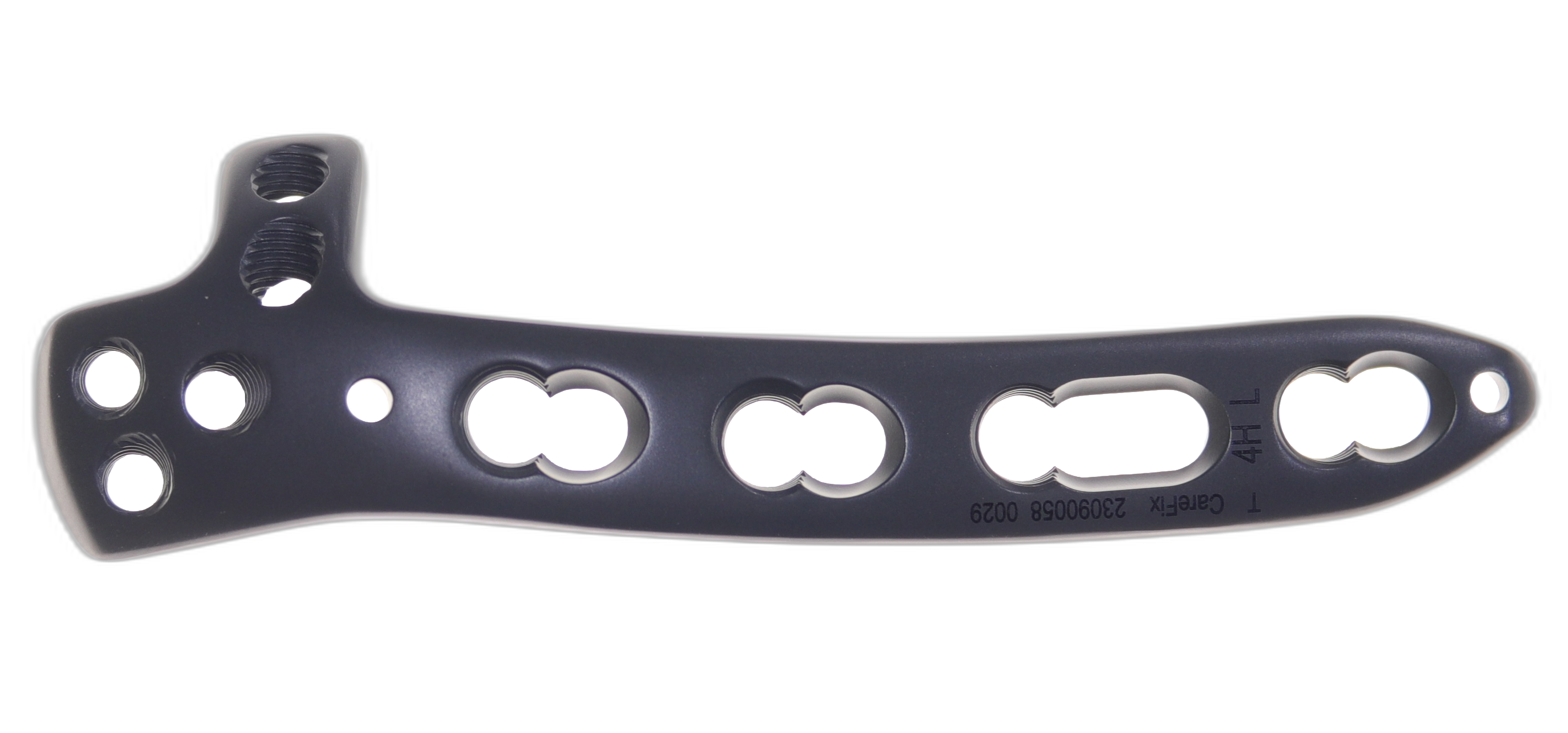
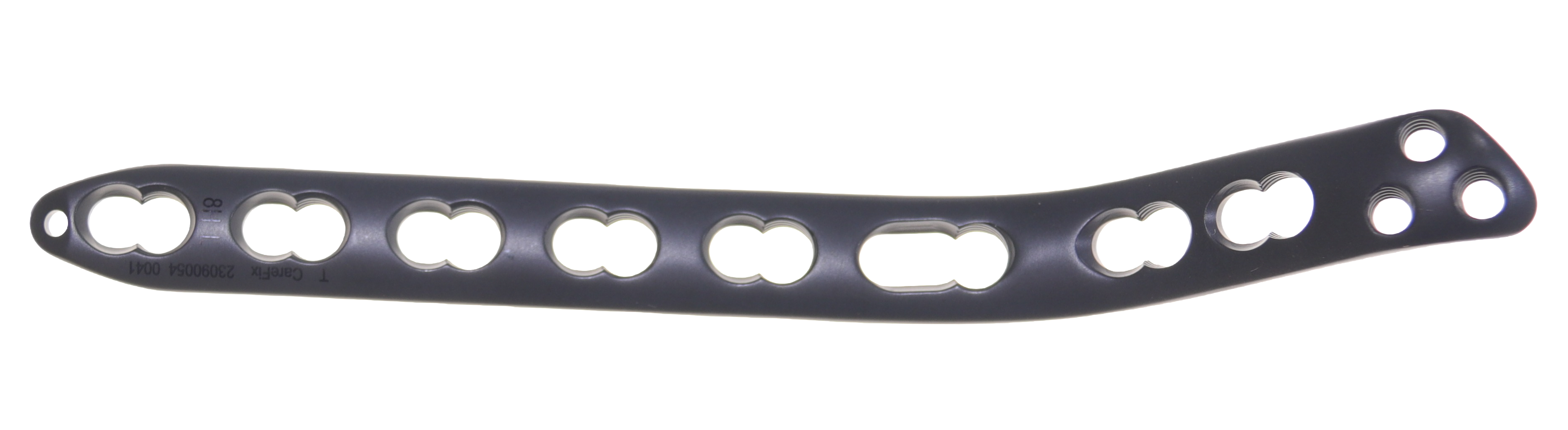
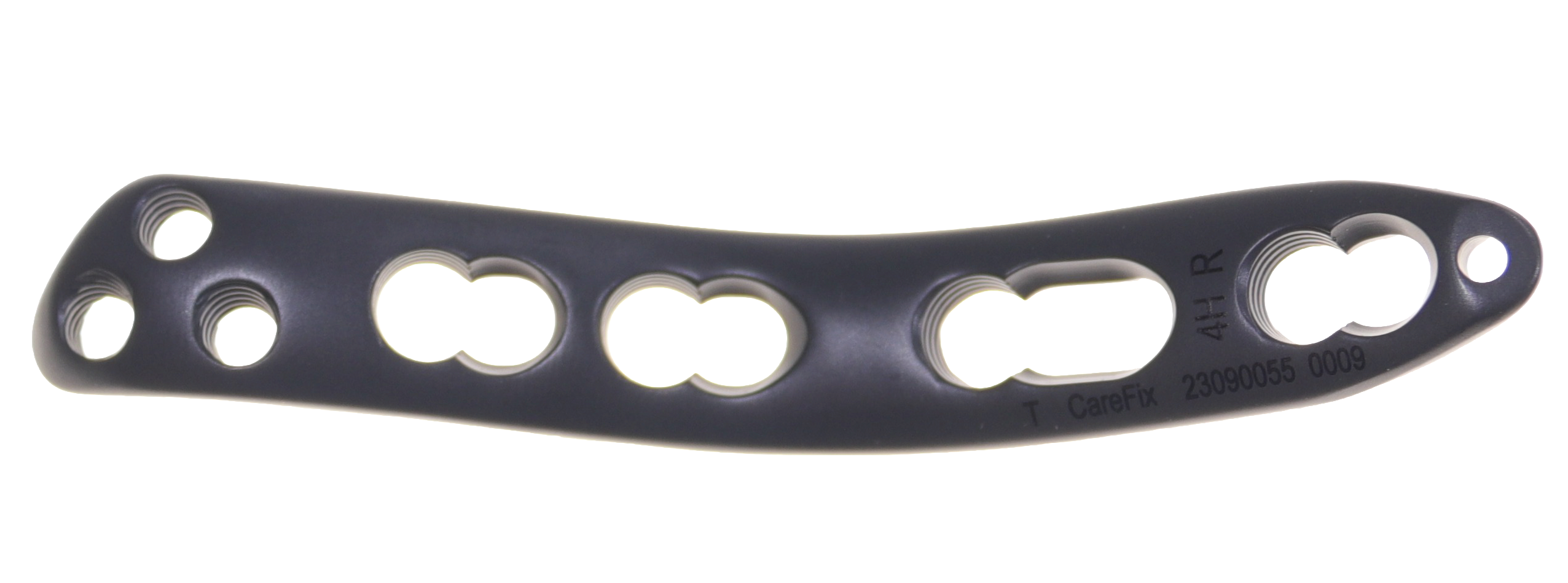
Distal Humeral Locking Plate Solutions

Get a Free Quote

Our representative will contact you soon.
Email
Name
Company Name
Message
0/1000

distal humeral locking plate

The distal humeral locking plate represents a specialized orthopedic implant designed to stabilize and repair fractures occurring at the lower end of the humerus bone near the elbow joint. This advanced fixation device combines anatomically contoured plate design with locking screw technology to provide superior fracture stabilization in one of the most challenging anatomical regions. The distal humeral locking plate features a low-profile construction that conforms precisely to the complex bone geometry of the distal humerus, minimizing soft tissue irritation while maximizing biomechanical stability. Its primary function involves maintaining proper bone alignment during the healing process, particularly for complex intra-articular fractures, comminuted fractures, and osteoporotic bone conditions where traditional fixation methods may prove insufficient. The technological innovation behind the distal humeral locking plate centers on its fixed-angle locking mechanism, which creates a stable construct by locking screws into the plate at predetermined angles. This angular stability eliminates the need for precise plate-to-bone compression and distributes forces more evenly across the fracture site. Clinical applications include treatment of distal humerus fractures in elderly patients with poor bone quality, complex multi-fragmentary fractures requiring reconstruction, periprosthetic fractures around elbow replacements, and revision surgeries where previous fixation has failed. Surgeons utilize the distal humeral locking plate in both open reduction internal fixation procedures and minimally invasive techniques, adapting surgical approach based on fracture pattern complexity and patient-specific anatomical considerations.

Popular Products

Choosing the distal humeral locking plate delivers significant practical benefits that directly impact surgical outcomes and patient recovery. The fixed-angle locking technology provides exceptional stability even in compromised bone quality, making it particularly valuable when treating elderly patients or those with osteoporosis where conventional screws might pull out or loosen over time. This enhanced grip strength means fewer complications and reduced need for revision surgeries, translating to better long-term results and lower overall healthcare costs. The anatomically pre-contoured design saves valuable operating room time by eliminating extensive intraoperative bending and shaping, allowing surgeons to work more efficiently while reducing anesthesia duration for patients. This streamlined surgical workflow benefits both medical facilities through improved scheduling efficiency and patients through shorter procedures and reduced surgical risks. The low-profile construction of the distal humeral locking plate minimizes hardware prominence under the skin, reducing postoperative discomfort and decreasing the likelihood of requiring secondary surgery for implant removal. Patients experience greater comfort during rehabilitation and better tolerance of the hardware throughout their recovery journey. The versatile screw options accommodate various fracture patterns and bone densities, giving surgeons flexibility to customize fixation strategy based on each unique clinical situation. This adaptability ensures optimal treatment regardless of fracture complexity or patient anatomy. The proven biomechanical stability enables earlier mobilization and faster initiation of physical therapy protocols, helping patients regain elbow function more quickly and return to daily activities sooner. Healthcare providers appreciate the predictable performance and consistent results, while patients value the improved quality of life and functional restoration that the distal humeral locking plate facilitates throughout their recovery process.

Practical Tips

Understanding Intramedullary Nail Complications

13

Jan

Understanding Intramedullary Nail Complications

Intramedullary nail complications represent a significant concern in orthopedic surgery, affecting patient outcomes and recovery timelines. These complications can arise during insertion, throughout the healing process, or during long-term implant re...
View More
Evolution of Intervertebral Fusion Device Materials: Clinical Efficacy Comparison between PEEK and Titanium Alloy

13

Jan

Evolution of Intervertebral Fusion Device Materials: Clinical Efficacy Comparison between PEEK and Titanium Alloy

The advancement of spinal surgery has been significantly influenced by the development of sophisticated intervertebral fusion device technologies. Modern spine surgeons rely heavily on these devices to achieve successful fusion outcomes while minimiz...
View More
Finite Element Optimization Design and Biomechanical Validation of Personalized IM Nails

11

Feb

Finite Element Optimization Design and Biomechanical Validation of Personalized IM Nails

The evolution of orthopedic trauma surgery has reached a pivotal moment with the emergence of personalized IM nails that revolutionize fracture treatment approaches. Advanced computational modeling and finite element analysis have enabled surgeons to...
View More
Cannulated screw system: Technological advancements in the treatment of ankle fractures

06

Mar

Cannulated screw system: Technological advancements in the treatment of ankle fractures

Ankle fractures represent one of the most challenging orthopedic injuries requiring precise surgical intervention and advanced fixation methods. The evolution of fracture treatment has been significantly enhanced by the introduction of modern cannula...
View More

Get a Free Quote

Our representative will contact you soon.
Email
Name
Company Name
Message
0/1000

distal humeral locking plate

Advanced Fixed-Angle Locking Technology

Advanced Fixed-Angle Locking Technology

The distal humeral locking plate incorporates sophisticated fixed-angle locking screw technology that fundamentally transforms fracture stabilization mechanics. Unlike traditional compression plates that rely solely on friction between plate and bone, this innovative system creates a unified construct where locking screws thread directly into the plate holes at predetermined angles. This angular stability generates a fixed-angle construct that functions as an internal fixator, distributing loads across the entire plate-screw assembly rather than concentrating stress at individual screw-bone interfaces. The mechanical advantage proves especially critical in osteoporotic bone where conventional screws often fail to achieve adequate purchase. By eliminating dependence on bone-plate compression, the distal humeral locking plate maintains reduction stability even when bone quality is severely compromised. Surgeons can confidently address complex fracture patterns knowing the fixation integrity remains consistent regardless of local bone density variations. This technology reduces the risk of screw loosening, secondary displacement, and fixation failure, ultimately protecting the surgical investment and preserving patient outcomes throughout the critical healing period.
Anatomically Optimized Plate Contour

Anatomically Optimized Plate Contour

The distal humeral locking plate features precision-engineered anatomical contouring that matches the unique three-dimensional geometry of the distal humerus bone. This anatomically specific design eliminates the guesswork and time-consuming manual plate bending traditionally required during surgery. The pre-contoured shape hugs the bone surface naturally, providing intimate bone contact while maintaining a low profile that minimizes soft tissue irritation and reduces the prominence of hardware beneath the skin. The carefully designed plate curvature accommodates the medial and lateral column architecture of the distal humerus, ensuring optimal screw placement trajectories that engage the strongest bone regions for maximum fixation strength. Multiple plate lengths and configurations allow surgeons to select the ideal implant size for each patient's anatomy and fracture pattern. The thoughtful design also incorporates strategic screw hole placement that avoids critical neurovascular structures while maximizing subchondral bone support in the articular segment. This anatomical optimization translates directly to improved surgical efficiency, reduced operative time, better soft tissue tolerance, and superior biomechanical performance that supports reliable fracture healing and functional restoration.
Comprehensive Fracture Pattern Versatility

Comprehensive Fracture Pattern Versatility

The distal humeral locking plate system demonstrates remarkable versatility in addressing diverse fracture patterns and clinical scenarios commonly encountered in distal humerus trauma. The implant accommodates simple extra-articular fractures, complex intra-articular fractures involving the joint surface, severely comminuted injuries with multiple bone fragments, and challenging periprosthetic fractures occurring around existing elbow replacement components. Variable screw options including locking screws, cortical screws, and cancellous screws provide surgeons with comprehensive fixation choices to match bone quality and fragment characteristics at different locations. The strategic hole arrangement permits multi-planar screw insertion, enabling surgeons to capture small articular fragments and achieve stable reconstruction of the joint surface. This adaptability extends to revision surgery situations where previous fixation has failed, offering reliable solutions even in compromised bone with existing screw holes. Bilateral plate designs ensure proper fit for both left and right extremities, simplifying inventory management for healthcare facilities. Whether treating high-energy trauma in young active patients or low-energy fractures in elderly individuals with fragile bone, the distal humeral locking plate provides dependable stabilization across the full spectrum of clinical presentations.
logo