Orthopedic Implants Plates | Bone Fixation

Get a Free Quote

Our representative will contact you soon.
Email
Name
Company Name
Message
0/1000

orthopedic implants plates

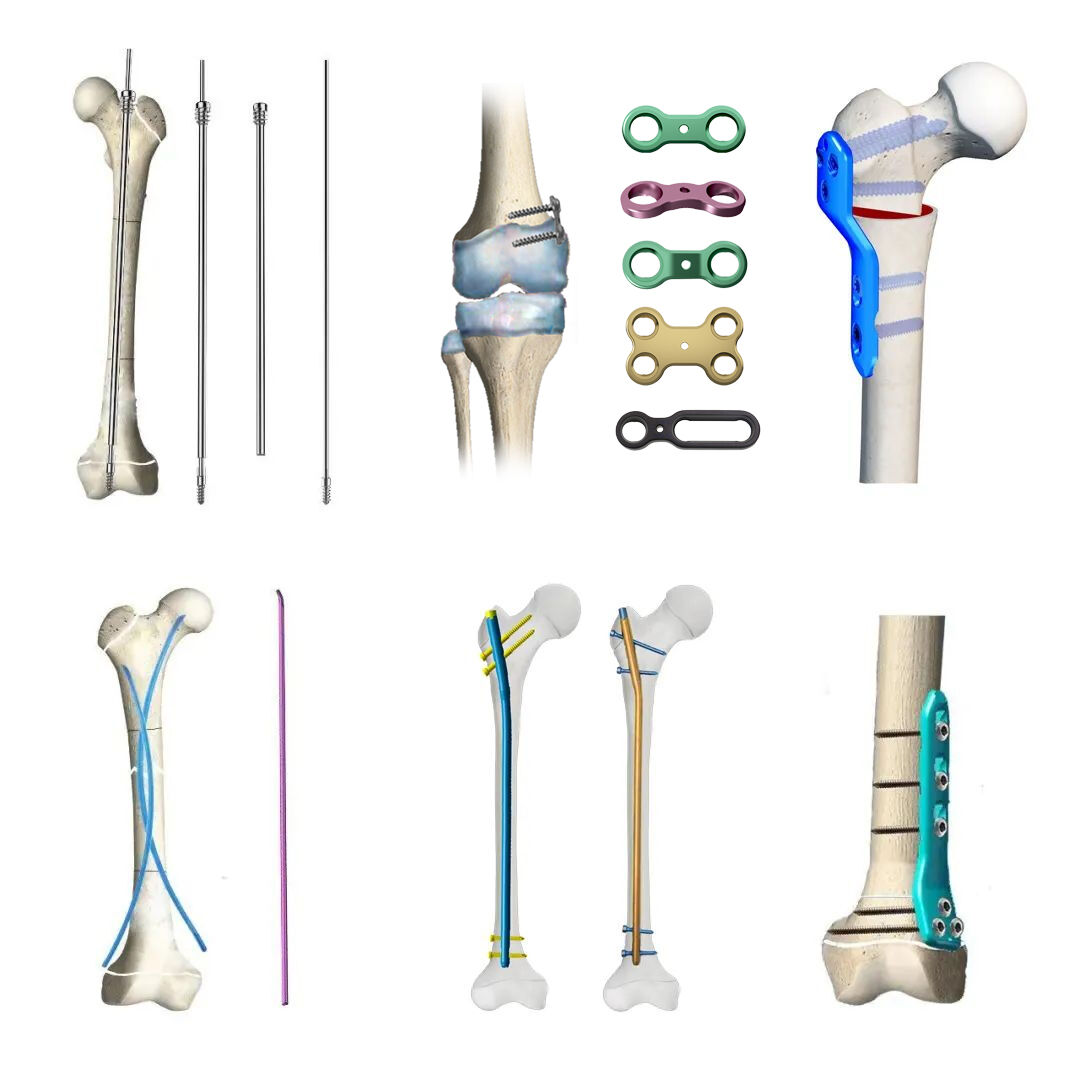
Orthopedic implants plates are specialized medical devices designed to stabilize and support fractured or damaged bones during the healing process. These precision-engineered plates serve as internal fixation systems that align bone fragments, maintain proper positioning, and facilitate optimal recovery outcomes. Manufactured from biocompatible materials such as titanium alloys, stainless steel, or specialized polymers, orthopedic implants plates provide the structural integrity necessary for bone regeneration while minimizing tissue reaction. The primary function of these devices is to distribute mechanical loads across fracture sites, preventing displacement and promoting natural bone union. Modern orthopedic implants plates incorporate advanced design features including anatomical contouring, variable screw angles, and low-profile construction to accommodate diverse patient anatomies and injury patterns. Technological innovations have enhanced these devices with locking mechanisms that create fixed-angle constructs, improving stability in osteoporotic bone and complex fracture configurations. Applications span multiple skeletal regions including upper extremities, lower extremities, spine, and craniomaxillofacial structures. Surgeons utilize orthopedic implants plates for treating traumatic fractures, corrective osteotomies, non-unions, and reconstructive procedures. The versatility of these implants allows customization based on fracture type, bone quality, and patient-specific requirements. Contemporary manufacturing techniques ensure consistent quality, precise dimensions, and surface treatments that promote osseointegration. These medical devices represent critical components in modern trauma and orthopedic surgery, enabling patients to achieve faster mobilization, reduced recovery times, and improved functional outcomes following skeletal injuries or planned surgical interventions.

Popular Products

Choosing orthopedic implants plates delivers substantial benefits that directly impact patient recovery and surgical success. The immediate advantage lies in providing rigid stabilization that allows early weight-bearing and joint movement, which accelerates rehabilitation and prevents complications associated with prolonged immobilization. Patients experience shorter hospital stays and faster return to daily activities, translating into reduced medical costs and improved quality of life. From an operational perspective, these devices simplify surgical procedures through intuitive instrumentation and standardized techniques that reduce operating room time. Surgeons benefit from comprehensive plate systems that offer multiple size options and configurations, ensuring appropriate solutions for diverse patient populations and injury complexities. The biocompatible materials used in orthopedic implants plates minimize adverse tissue reactions and support long-term biological integration, reducing the likelihood of implant-related complications or revision surgeries. Application suitability extends across age groups and bone conditions, with specialized designs addressing pediatric patients, elderly individuals with compromised bone density, and athletes requiring rapid return to performance. Decision-makers appreciate the proven clinical track record supported by extensive research and documented outcomes showing high union rates and low failure incidence. The durability and corrosion resistance of modern orthopedic implants plates ensure reliable performance throughout the healing period without degradation. Cost-effectiveness emerges from reduced complication rates, fewer follow-up interventions, and predictable results that minimize overall treatment expenses. Healthcare facilities gain operational efficiency through standardized inventory management and streamlined surgical workflows. Patients value the minimal scarring associated with contemporary low-profile designs and the possibility of retaining implants permanently without discomfort. These practical advantages make orthopedic implants plates an essential investment for achieving optimal fracture management and patient satisfaction.

Latest News

Application analysis of intramedullary nail system in ankle joint fusion

16

Dec

Application analysis of intramedullary nail system in ankle joint fusion

The evolution of orthopedic surgical techniques has brought significant advancements in treating complex ankle pathologies, particularly through the implementation of modern fixation systems. An intramedullary nail system represents a revolutionary a...
View More
Application of carbon fiber material external fixation bracket in clinical practice

13

Jan

Application of carbon fiber material external fixation bracket in clinical practice

The integration of advanced materials in orthopedic surgery has revolutionized patient care and treatment outcomes. Among these innovations, carbon fiber external fixation systems have emerged as a superior alternative to traditional metal frameworks...
View More
Understanding Intramedullary Nail Complications

13

Jan

Understanding Intramedullary Nail Complications

Intramedullary nail complications represent a significant concern in orthopedic surgery, affecting patient outcomes and recovery timelines. These complications can arise during insertion, throughout the healing process, or during long-term implant re...
View More
Distal radial volar locking plate: refined design enhances the success rate of fracture fixation

06

Mar

Distal radial volar locking plate: refined design enhances the success rate of fracture fixation

The treatment of distal radius fractures has undergone significant evolution in recent decades, with the distal radial volar locking plate emerging as a cornerstone technology in modern orthopedic practice. These innovative implants represent a parad...
View More

Get a Free Quote

Our representative will contact you soon.
Email
Name
Company Name
Message
0/1000

orthopedic implants plates

Advanced Locking Technology for Superior Stability

Advanced Locking Technology for Superior Stability

The incorporation of locking screw technology in orthopedic implants plates represents a revolutionary advancement in fracture fixation methodology. This sophisticated mechanism creates a fixed-angle relationship between screws and the plate, transforming the construct into a unified device that functions as an internal fixator rather than relying solely on compression against bone. The locking feature proves particularly valuable when treating patients with osteoporotic or poor-quality bone, where traditional compression plating may compromise stability due to insufficient screw purchase. By eliminating the need for precise plate contouring and bone contact, locking technology reduces surgical complexity and operating time while maintaining biomechanical integrity. The angular stability provided prevents screw loosening and backout, common complications in conventional systems, thereby reducing revision surgery risks. Surgeons can utilize this technology for periarticular fractures, metaphyseal regions, and comminuted patterns where maintaining reduction proves challenging. The versatility of variable-angle locking systems further enhances surgical flexibility, allowing trajectory adjustments to avoid vital structures or optimize screw placement in compromised bone. Patients benefit from more predictable healing outcomes, reduced pain during recovery, and confidence in implant performance throughout the rehabilitation process. This technological innovation has fundamentally changed orthopedic trauma management by expanding treatment possibilities and improving success rates across diverse fracture presentations.
Anatomically Contoured Designs for Optimal Fit

Anatomically Contoured Designs for Optimal Fit

Modern orthopedic implants plates feature anatomically pre-contoured shapes that precisely match the natural geometry of specific bones and skeletal regions. This design philosophy eliminates extensive intraoperative bending and adjustments that previously consumed surgical time and risked implant weakening. By studying bone morphology across diverse patient populations, manufacturers create plate profiles that accommodate anatomical variations while maintaining optimal biomechanical positioning. The superior fit achieved through anatomical contouring ensures even load distribution across the implant-bone interface, reducing stress concentrations that could lead to hardware failure or bone damage. Surgeons appreciate the simplified surgical technique, as proper plate placement becomes intuitive and reproducible, particularly beneficial during complex procedures or emergency trauma situations. The low-profile construction integrated into these anatomically designed orthopedic implants plates minimizes soft tissue irritation, reduces the prominence of hardware beneath the skin, and decreases patient discomfort during healing. This feature proves especially important in subcutaneous locations such as the clavicle, distal radius, and ankle regions where tissue coverage is limited. Patients experience improved cosmetic outcomes with less visible hardware and reduced likelihood of requiring implant removal due to irritation. The precision fit also enhances biological healing by maintaining periosteal blood supply and minimizing bone devascularization, critical factors for successful fracture union and long-term skeletal health.
Comprehensive System Compatibility and Surgical Efficiency

Comprehensive System Compatibility and Surgical Efficiency

Contemporary orthopedic implants plates are engineered as part of comprehensive plating systems that provide complete solutions for fracture management across all skeletal regions. This systematic approach ensures compatibility among plates, screws, and instrumentation, streamlining inventory management and reducing logistical complexity for healthcare facilities. Surgeons benefit from standardized surgical techniques that transfer across different anatomical locations, shortening the learning curve for new procedures and improving confidence during complex cases. The modular nature of these systems allows combination of different plate types and supplementary implants when addressing multifragmentary fractures or unusual injury patterns. Comprehensive instrument sets designed specifically for these orthopedic implants plates facilitate precise drilling, screw insertion, and plate positioning while protecting surrounding tissues from iatrogenic injury. Efficiency gains translate into shorter anesthesia times, reduced patient exposure to surgical risks, and increased operating room throughput for busy trauma centers. Color-coding, clear labeling, and intuitive instrument design minimize errors and support surgical team coordination during demanding procedures. Healthcare administrators value the cost predictability and simplified procurement processes associated with unified plating systems from trusted manufacturers. The extensive size ranges available within these systems ensure appropriate solutions for pediatric, standard, and large patient populations without requiring custom implants. This comprehensive approach delivers consistent clinical outcomes while optimizing resource utilization and supporting evidence-based orthopedic practice standards.
logo