EN
EN

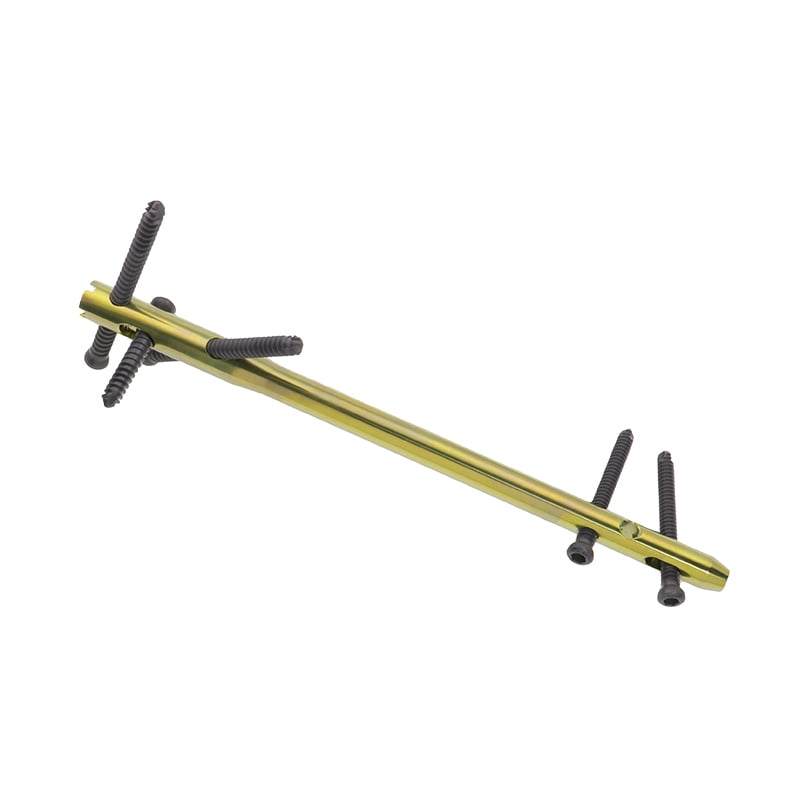
When treating adult old femoral shaft fractures, surgeons face a critical decision between two well-established techniques: intramedullary nailing and plate fixation. Both methods aim to restore femoral alignment and stability, but their clinical outcomes, complication profiles, and rehabilitation timelines differ significantly. Understanding which approach is more effective for this specific patient population requires a close look at biomechanical principles, surgical demands, and patient recovery data.
Old femoral shaft fractures, defined as those presenting weeks or months after initial injury, present unique surgical challenges. Callus formation, bone remodeling, and soft tissue scarring complicate both intramedullary nailing and plate fixation. However, intramedullary nailing has emerged as the preferred choice for most adult patients in this category, supported by its central load-sharing biomechanics and lower soft tissue disruption. This article examines the evidence and logic behind that preference in detail.
Biomechanical Advantages of Intramedullary Nailing
Load Sharing vs Load Bearing
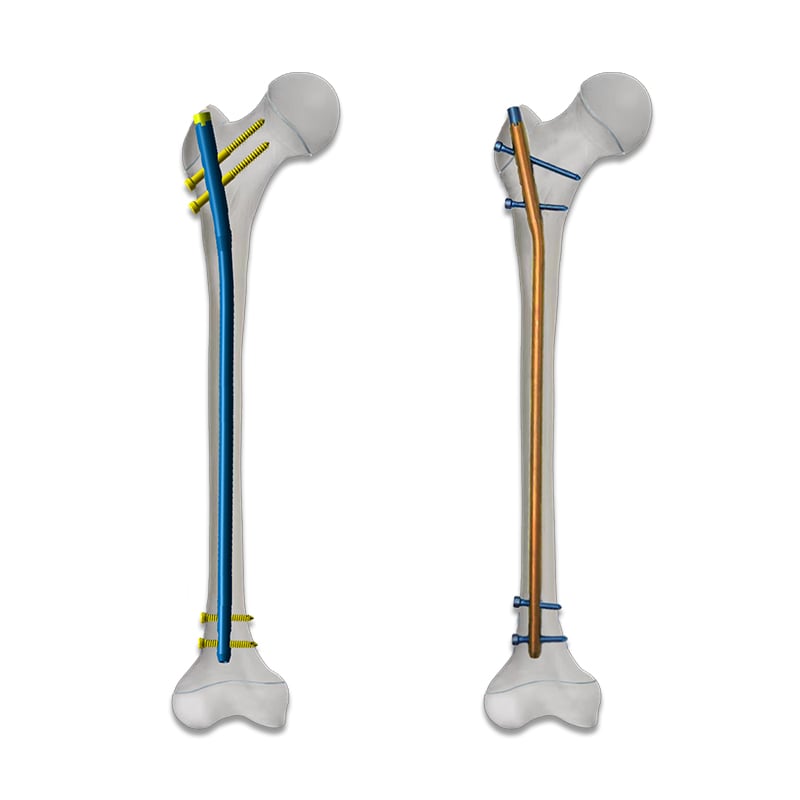
The fundamental mechanical difference between intramedullary nailing and plate fixation lies in how each construct handles physiological forces. Intramedullary nailing positions the implant within the medullary canal, placing it along the mechanical axis of the femur. This design allows the nail to share the load with the surrounding bone rather than bearing it entirely. As a result, intramedullary nailing reduces stress concentration at the implant-bone interface, lowering the risk of implant fatigue and secondary fracture.
Plate fixation, by contrast, applies an eccentric load-bearing construct to the lateral cortex. In old femoral shaft fractures where cortical density may already be compromised, this eccentricity can generate bending forces that increase the likelihood of screw pull-out and plate failure. Intramedullary nailing avoids this mechanical disadvantage by centralizing force distribution through the bone's natural axis, making it biomechanically superior for the femoral shaft.
Rotational and Axial Stability
Intramedullary nailing with interlocking screws provides robust resistance to both rotational and axial forces. The proximal and distal interlocking configuration prevents telescoping and rotation, which are common concerns in old fractures where normal fracture geometry may be distorted by early callus. Plate fixation can also provide rotational control, but achieving equivalent stability often requires longer plates and more screws, increasing surgical complexity and periosteal stripping. Intramedullary nailing delivers this stability with a minimally invasive insertion technique that preserves the periosteal blood supply critical for healing in delayed presentations.
Surgical and Clinical Considerations
Soft Tissue and Periosteal Preservation
One of the most compelling clinical arguments for intramedullary nailing in old femoral shaft fractures is its ability to minimize soft tissue damage. Old fractures are surrounded by fibrous tissue, early bone callus, and contracted musculature. Open plate fixation requires extensive soft tissue dissection to expose the fracture site and position the plate correctly. This dissection disrupts the periosteal envelope, which is especially problematic in old fractures where the periosteal blood supply is already the primary driver of delayed healing.
Intramedullary nailing allows surgeons to use a closed or minimally open technique, inserting the nail through a proximal entry point without exposing the fracture directly. This preserves the biological environment around the fracture and maintains the integrity of any callus that has already formed. In clinical practice, intramedullary nailing therefore supports faster union rates and fewer wound complications compared to plate fixation in this specific scenario.
Intraoperative Challenges in Old Fractures
Old femoral shaft fractures present specific intraoperative challenges for intramedullary nailing. The medullary canal may be partially obstructed by early endosteal callus, requiring careful reaming to restore canal patency before nail insertion. Closed reduction can also be more difficult due to fracture shortening and angular deformity caused by prolonged muscle pull. Despite these challenges, experienced surgeons find that intramedullary nailing remains manageable through careful preoperative planning and the use of appropriate reduction tools. Plate fixation may seem simpler in terms of reduction visibility, but the biological cost of open exposure typically outweighs that advantage.
Outcomes and Recovery After Intramedullary Nailing
Union Rates and Complication Profiles
Clinical studies evaluating intramedullary nailing for delayed and neglected femoral shaft fractures consistently report favorable union rates. The load-sharing mechanics of intramedullary nailing promote micromotion at the fracture site within a controlled range, which stimulates callus maturation and progressive ossification. Plate fixation tends to create a more rigid construct that suppresses this beneficial micromotion, potentially slowing union in cases where biological activity is already suboptimal due to delayed presentation.
Complication profiles also favor intramedullary nailing in this population. Deep infection rates are lower due to reduced soft tissue exposure. Implant failure rates are lower due to the central load-sharing design. Refracture after implant removal is less common with intramedullary nailing because the periosteal cortex remains intact. Collectively, these outcome differences make intramedullary nailing the statistically and clinically stronger choice for adult old femoral shaft fractures.
Rehabilitation and Weight-Bearing Timeline
Patients treated with intramedullary nailing can typically begin partial weight-bearing earlier than those treated with plate fixation. Because intramedullary nailing distributes axial forces through the nail and the bone simultaneously, the construct tolerates early loading without catastrophic risk. Early mobilization reduces the risk of muscle atrophy, venous thromboembolism, and joint stiffness, all of which are heightened concerns in adult patients with old fractures who may already have compromised functional status. Plate fixation generally requires a more conservative weight-bearing protocol due to the eccentric load concentration at the plate-bone interface.
FAQ
Is intramedullary nailing always preferred over plate fixation for old femoral fractures?
Intramedullary nailing is generally preferred, but plate fixation may still be chosen in specific cases where the medullary canal is severely compromised or when deformity correction requires direct visualization. Intramedullary nailing remains the standard first-line choice for most adult old femoral shaft fractures due to its biomechanical and biological advantages.
How does delayed fracture presentation affect intramedullary nailing technique?
In old fractures, intramedullary nailing often requires reaming to clear early endosteal callus and careful closed reduction to address shortening or angulation. Surgeons may use percutaneous reduction aids or limited open windows to assist alignment. Despite these additional steps, intramedullary nailing retains its advantage of minimizing soft tissue disruption compared to full open plate fixation.
What implant features matter most when selecting a nail for this procedure?
For intramedullary nailing of old femoral shaft fractures, implant selection should prioritize adequate nail diameter for stable canal fit, multiple interlocking options for rotational control, and a design that accommodates variable fracture levels. A well-designed interlocking nail provides the stability and flexibility needed to manage the anatomical variability common in delayed fracture presentations.