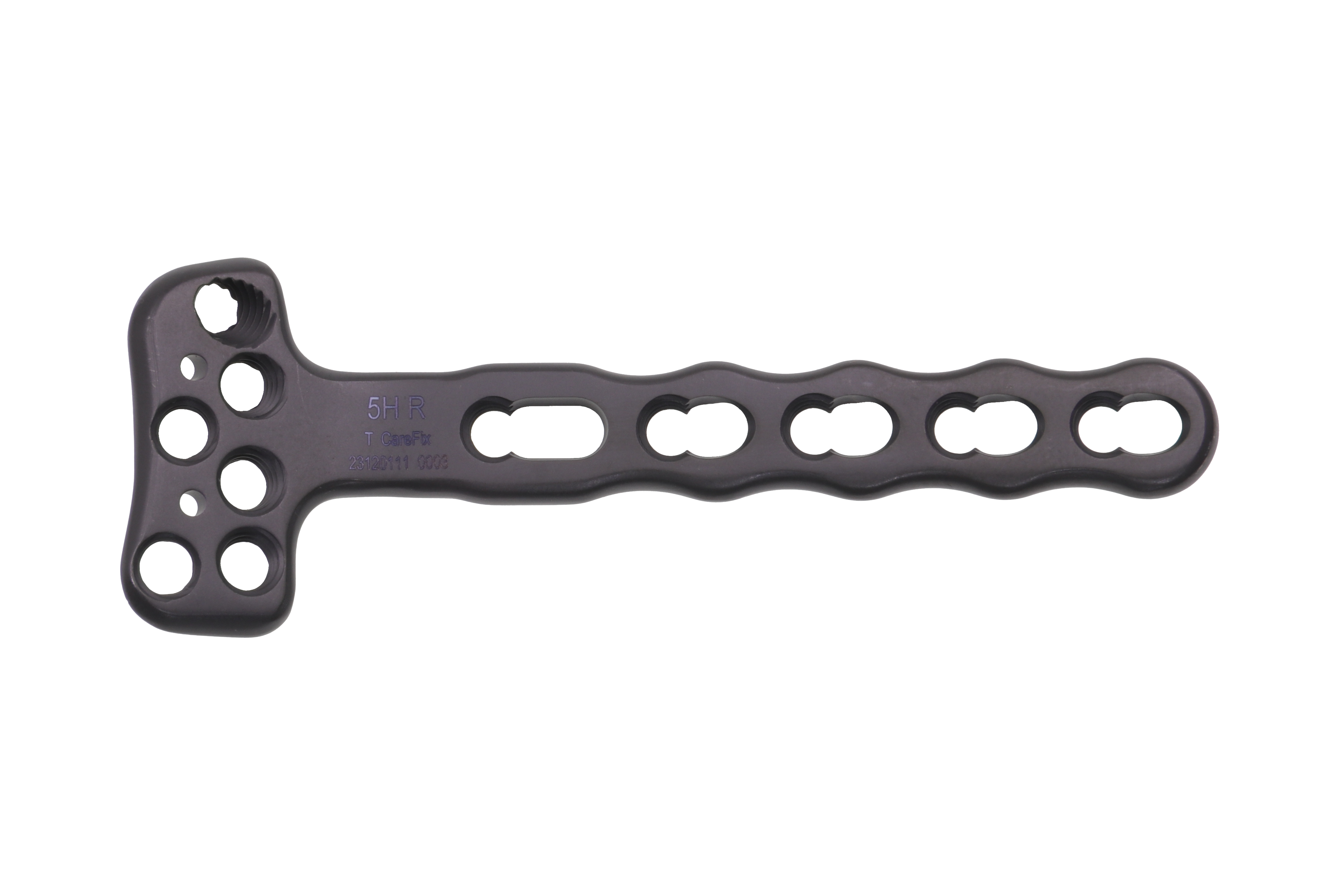
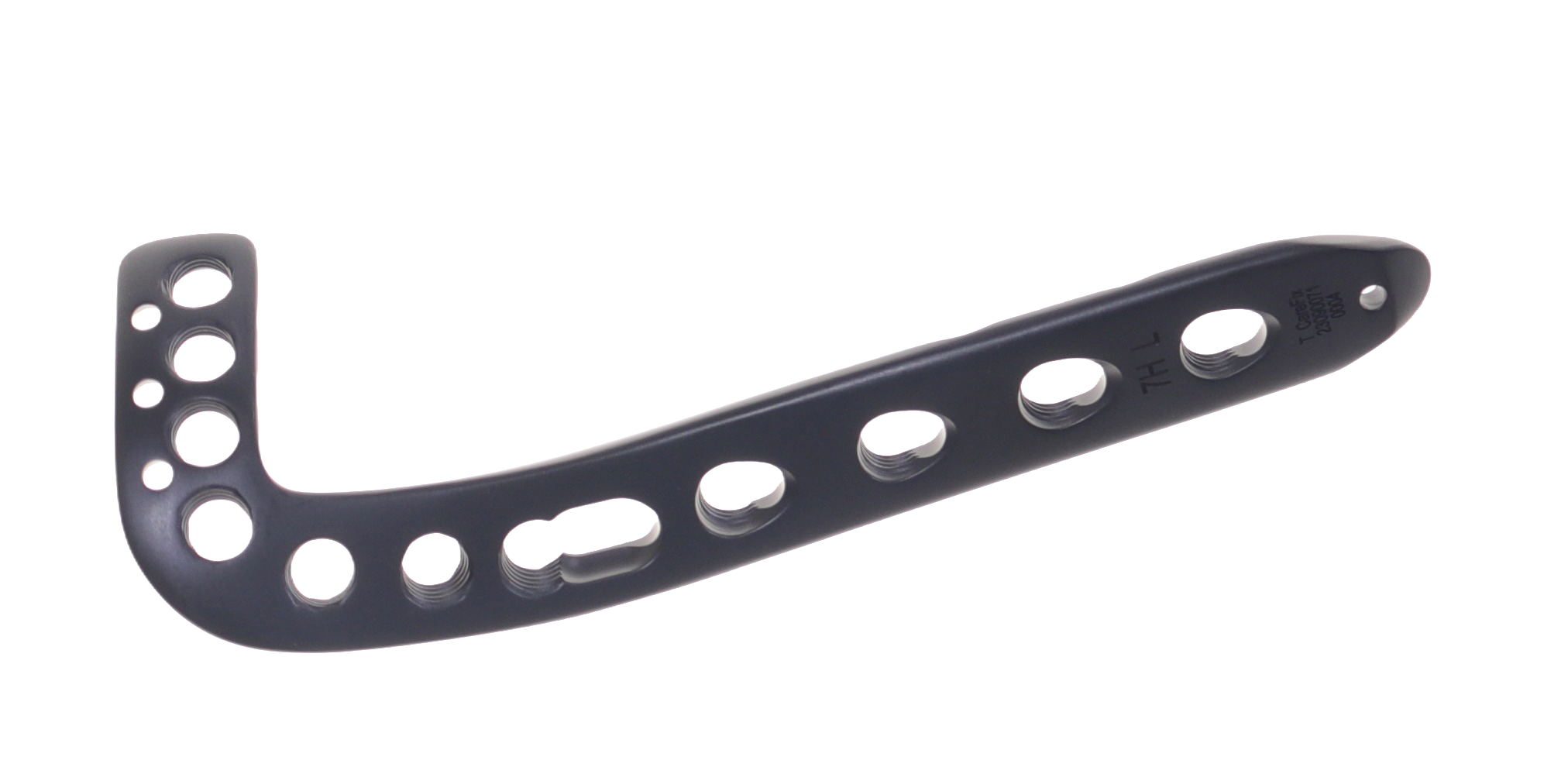
Extra Articular Plate: Advanced Fracture Fixation

Get a Free Quote

Our representative will contact you soon.
Email
Name
Company Name
Message
0/1000

extra articular plate

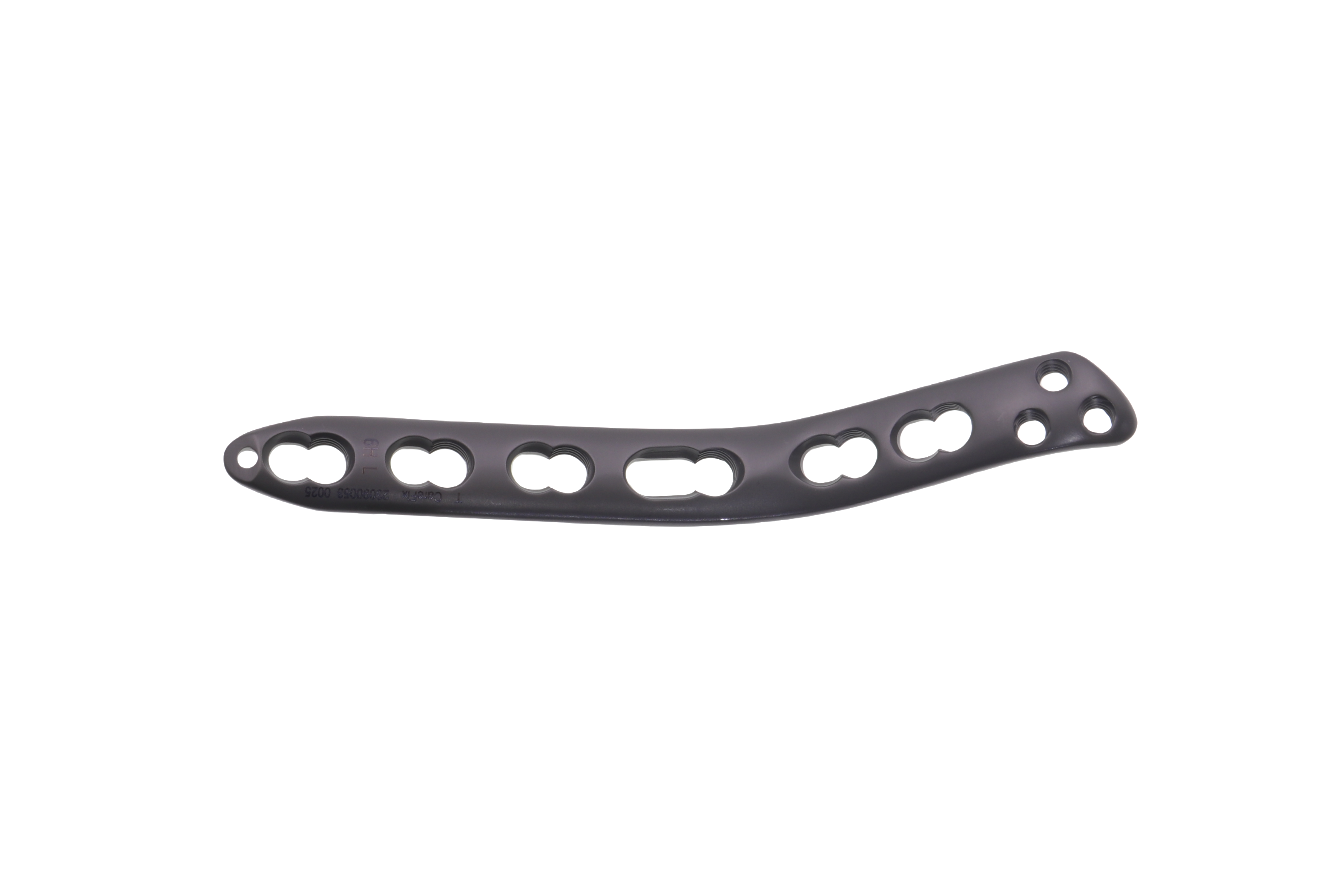
The extra articular plate is a specialized orthopedic implant designed to treat complex fractures occurring outside the joint space, particularly in areas where traditional internal fixation methods may prove insufficient. This advanced surgical device provides robust stabilization for periarticular and metaphyseal fractures, commonly used in proximal and distal bone segments of the tibia, femur, humerus, and radius. The extra articular plate features an anatomically contoured design that conforms precisely to bone geometry, ensuring optimal contact and load distribution across the fracture site. Manufactured from medical-grade titanium or stainless steel alloys, these plates demonstrate exceptional biocompatibility and mechanical strength. The technological features include multiple fixed-angle and variable-angle locking screw options, which create a fixed-angle construct that enhances stability while minimizing soft tissue irritation. The low-profile design reduces the risk of implant prominence and associated complications. The extra articular plate incorporates combination holes that accept both locking and cortical screws, providing surgeons with versatile fixation strategies tailored to specific fracture patterns and bone quality. Applications span trauma surgery, reconstructive procedures, and corrective osteotomies where extra articular plate systems deliver reliable fracture stabilization. The plate's engineering allows for minimally invasive surgical techniques, reducing operative time and preserving periosteal blood supply. This orthopedic solution addresses the clinical need for dependable fixation in challenging anatomical locations where joint preservation is paramount and anatomical reduction is critical for functional recovery.

Popular Products

When selecting an extra articular plate for fracture management, buyers gain access to numerous practical benefits that directly impact patient outcomes and surgical efficiency. The primary advantage lies in the superior biomechanical stability these plates provide, which accelerates bone healing by maintaining precise fracture reduction throughout the recovery period. For healthcare facilities, the extra articular plate represents a cost-effective investment because it reduces revision surgery rates and shortens hospital stays through reliable primary fixation. Surgeons appreciate the operational benefits of working with these plates, as the anatomical pre-contouring minimizes intraoperative plate bending, saving valuable surgical time and reducing anesthesia exposure for patients. The locking screw technology incorporated in the extra articular plate creates angular stability independent of bone quality, making it particularly suitable for osteoporotic patients where traditional compression plating may fail. This application suitability extends across diverse patient populations and fracture complexities, from simple two-part fractures to complicated comminuted patterns requiring bridging techniques. The plate's compatibility with minimally invasive percutaneous techniques means smaller incisions, less soft tissue stripping, and faster patient recovery with reduced postoperative pain. Decision-makers will find that the extra articular plate offers documented clinical outcomes supporting its efficacy, with extensive peer-reviewed literature validating its use across multiple anatomical locations. The dual functionality of combination screw holes provides flexibility during surgery, allowing surgeons to adapt their fixation strategy based on real-time assessment of fracture stability and bone quality. Furthermore, the low-profile design minimizes implant-related complications such as soft tissue irritation and tendon impingement, which translates to higher patient satisfaction scores and fewer hardware removal procedures, ultimately reducing long-term healthcare costs while improving quality of life for patients.

Tips And Tricks

Application of carbon fiber material external fixation bracket in clinical practice

13

Jan

Application of carbon fiber material external fixation bracket in clinical practice

The integration of advanced materials in orthopedic surgery has revolutionized patient care and treatment outcomes. Among these innovations, carbon fiber external fixation systems have emerged as a superior alternative to traditional metal frameworks...
View More
Evolution of Intervertebral Fusion Device Materials: Clinical Efficacy Comparison between PEEK and Titanium Alloy

13

Jan

Evolution of Intervertebral Fusion Device Materials: Clinical Efficacy Comparison between PEEK and Titanium Alloy

The advancement of spinal surgery has been significantly influenced by the development of sophisticated intervertebral fusion device technologies. Modern spine surgeons rely heavily on these devices to achieve successful fusion outcomes while minimiz...
View More
Finite Element Optimization Design and Biomechanical Validation of Personalized IM Nails

11

Feb

Finite Element Optimization Design and Biomechanical Validation of Personalized IM Nails

The evolution of orthopedic trauma surgery has reached a pivotal moment with the emergence of personalized IM nails that revolutionize fracture treatment approaches. Advanced computational modeling and finite element analysis have enabled surgeons to...
View More
Treatment of osteomyelitis and tibial pseudarthrosis: The advantages of the Ilizarov frame

06

Mar

Treatment of osteomyelitis and tibial pseudarthrosis: The advantages of the Ilizarov frame

The treatment of complex orthopedic conditions such as osteomyelitis and tibial pseudarthrosis presents significant challenges that require innovative surgical approaches. Among the most effective solutions available to orthopedic surgeons today is t...
View More

Get a Free Quote

Our representative will contact you soon.
Email
Name
Company Name
Message
0/1000

extra articular plate

Advanced Locking Technology for Superior Stability

Advanced Locking Technology for Superior Stability

The extra articular plate incorporates state-of-the-art locking screw technology that fundamentally transforms fracture fixation mechanics compared to conventional plating systems. This innovative feature creates a fixed-angle construct where locking screws thread directly into the plate holes, forming a unified implant-screw assembly that functions as an internal fixator. The importance of this technology becomes evident in patients with compromised bone quality, where traditional screws relying on friction between screw threads and bone may lose purchase over time. The locking mechanism distributes forces across the entire plate rather than concentrating stress at individual screw sites, significantly reducing the risk of screw loosening or toggle. For surgeons, this means predictable stability regardless of bone density, enabling confident fixation in elderly patients or those with metabolic bone disease. The extra articular plate's locking technology also permits biological fixation strategies, where surgeons can bridge comminuted fracture zones without compressing fragments, preserving blood supply while maintaining alignment. This feature delivers exceptional value by expanding the treatment envelope to include previously challenging cases, reducing complications, and supporting earlier patient mobilization with protected weight-bearing protocols that accelerate return to function.
Anatomical Contouring for Optimal Bone Adaptation

Anatomical Contouring for Optimal Bone Adaptation

The anatomically pre-contoured design of the extra articular plate represents a significant advancement in orthopedic implant engineering, offering surgeons a solution that matches natural bone morphology across diverse anatomical sites. Each plate undergoes precise computer-aided design based on extensive bone mapping studies, ensuring that the curvature, twist, and profile correspond to population-averaged skeletal geometry. This anatomical conformity is critically important because it maximizes plate-to-bone contact area, which enhances load distribution and reduces stress concentrations that could lead to implant failure or bone resorption. During surgery, the pre-contoured extra articular plate dramatically reduces the time surgeons spend bending and shaping implants, which not only shortens operative duration but also maintains the structural integrity of the plate by avoiding work-hardening and potential stress risers created by manual contouring. The ergonomic fit minimizes soft tissue elevation required for plate positioning, preserving periosteal blood supply essential for fracture healing. For patients, this translates to reduced surgical trauma, faster recovery, and lower infection risk. The value proposition extends to inventory management as well, since standardized anatomical plates reduce the need for extensive contouring instrument sets, simplifying surgical tray preparation and sterilization workflows while ensuring consistent, reproducible surgical results across different surgeons and institutions.

Versatile Combination Hole Design for Surgical Flexibility

Versatile Combination Hole Design for Surgical Flexibility

The extra articular plate features an intelligent combination hole design that accommodates both locking and non-locking cortical screws within the same aperture, providing surgeons with unparalleled intraoperative flexibility to customize fixation strategies. This dual-functionality is particularly valuable when managing complex fracture patterns where different regions of the bone require distinct fixation approaches. Near the fracture site, surgeons can employ locking screws to create angular stability without compressing fracture fragments, while in areas of intact bone, standard cortical screws can achieve interfragmentary compression to encourage primary bone healing. The combination hole design in the extra articular plate eliminates the compromise inherent in single-function plates, where surgeons must choose between compression and locked fixation at the planning stage. This adaptability proves essential when intraoperative findings differ from preoperative imaging, allowing real-time tactical adjustments without implant substitution. The versatility extends to revision scenarios where pre-existing screw holes may limit placement options, as the combination holes maximize the likelihood of achieving secure fixation around previous hardware sites. For healthcare systems, this flexibility reduces the number of plate variants required in inventory, lowering capital investment and storage costs while ensuring surgeons have appropriate tools for virtually any extra articular fracture configuration they encounter, ultimately improving surgical outcomes through optimized biomechanical fixation tailored to individual patient anatomy and fracture characteristics.
logo