EN
EN

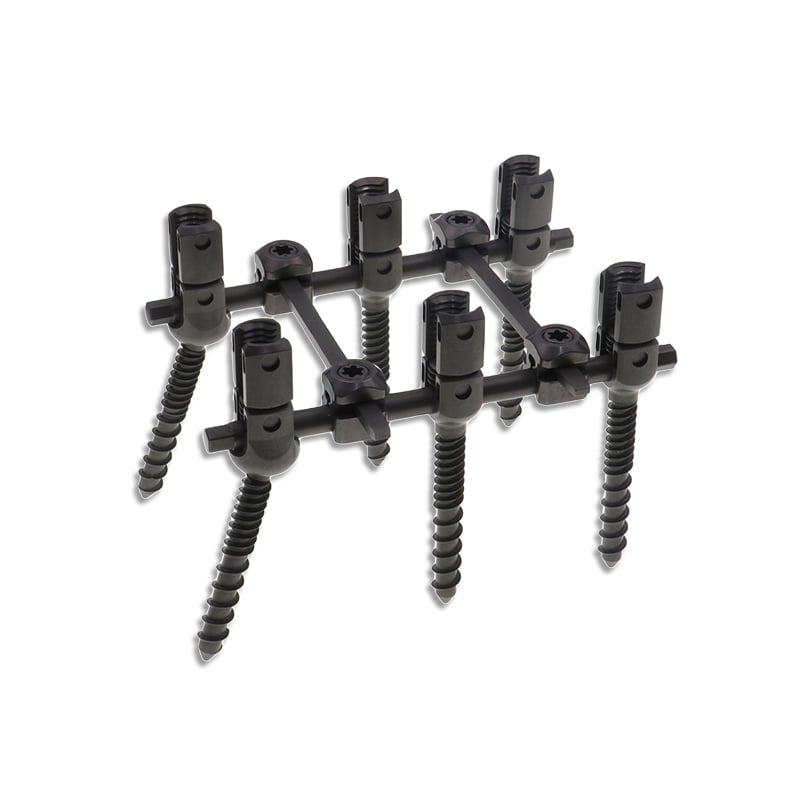
Thoracolumbar spine surgery requires precision, stability, and long-term patient outcomes. The selection and application of spine implants directly influence surgical success, fusion rates, and patient mobility recovery. Modern spine implants have transformed orthopedic surgery by providing robust fixation schemes that address complex degenerative, traumatic, and deformity cases. Understanding the role of spine implants in thoracolumbar fixation is essential for surgeons, surgical teams, and healthcare administrators evaluating treatment protocols and implant technologies.
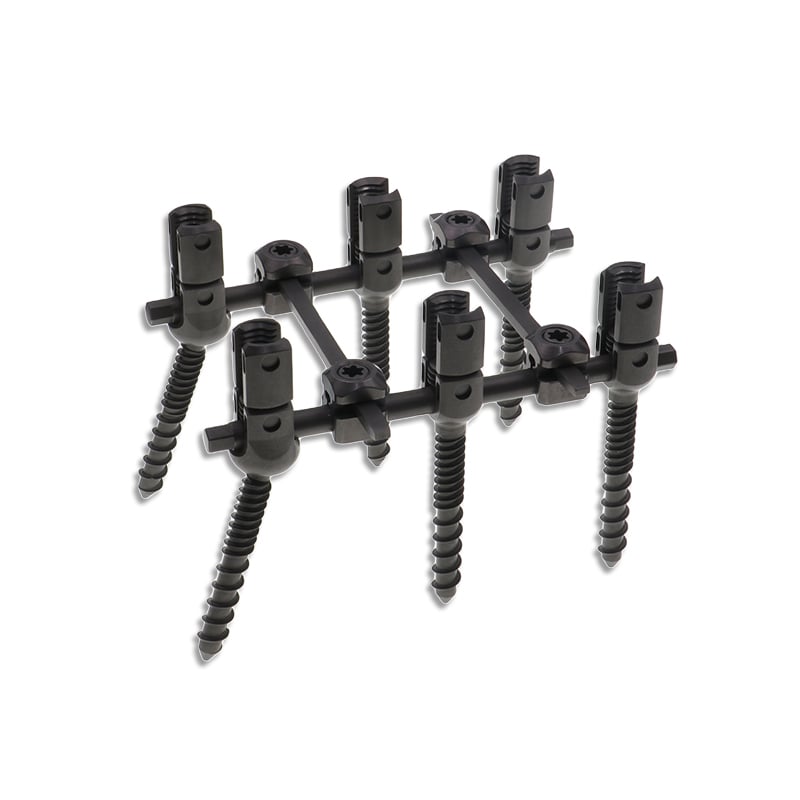
The thoracolumbar region represents a critical junction where the thoracic and lumbar spines meet, bearing significant biomechanical loads and requiring specialized spine implants for optimal stabilization. Posterior fixation approaches using spine implants have become the gold standard for many thoracolumbar procedures, combining pedicle screw technology, rod systems, and interbody devices to achieve multi-level fusion and load sharing. Advances in spine implants have enabled surgeons to customize fixation schemes based on pathology, patient anatomy, and surgical goals, improving outcomes while minimizing complications.
Understanding Spine Implants in Thoracolumbar Fixation
The Role of Spine Implants in Surgical Stability
Spine implants serve as mechanical anchors that restore spinal alignment, limit abnormal motion, and promote bone fusion in the thoracolumbar region. Pedicle screws, the foundational component of modern spine implants, provide three-dimensional fixation by engaging cortical bone within the vertebral pedicles. These spine implants distribute loads across multiple vertebral levels, reducing stress on individual segments and protecting healing bone interfaces. The biomechanical strength of spine implants directly correlates with fusion success rates and patient functional recovery, making implant design and material selection critical factors in surgical planning.
Posterior Approach Advantages with Spine Implants
The posterior approach dominates thoracolumbar surgery because spine implants placed posteriorly provide superior control over deformity correction and rotational stability. Posterior spine implants allow direct visualization of anatomical landmarks, reduce soft tissue trauma compared to anterior approaches, and enable immediate load sharing through rod-screw constructs. This approach is particularly advantageous for trauma cases, degenerative stenosis, and deformity correction where spine implants must resist complex forces. Surgeons can achieve robust fixation with spine implants while preserving anterior vertebral body height and disc space, which supports better long-term biomechanical function and reduces adjacent-segment degeneration risk.
Fixation Schemes and Implant Configuration Strategies
Multi-Level Fixation with Spine Implants
Multi-level fixation using spine implants extends from two to six or more vertebral levels depending on pathology severity, bone quality, and deformity magnitude. Longer constructs with multiple spine implants provide greater resistance to shear forces and rotational stress but increase surgical time and implant cost. Surgeons balance fixation extent against clinical objectives, patient comorbidities, and fusion mass dimensions. Shorter constructs using strategically placed spine implants may suffice for single-segment degenerative disease, while trauma cases with burst fractures or multilevel instability require extended fixation schemes with reinforced spine implants that distribute load across wider spinal segments.
Rod-Screw Configurations and Load Distribution
Rod diameter, material composition, and connection points significantly influence how spine implants distribute forces throughout the fixation construct. Larger-diameter rods provide greater bending stiffness and torsional resistance, allowing spine implants to maintain alignment during the critical early fusion phase. Hybrid fixation schemes combine rigid rods in the primary load-bearing region with dynamic or semi-rigid components in adjacent levels, optimizing how spine implants manage biomechanical stress. Surgeon experience and anatomical variability inform rod-screw configuration choices, ensuring spine implants are positioned for maximum cortical bone purchase and resistance to loosening, which represents a primary failure mode in thoracolumbar fixation.
Clinical Outcomes and Patient-Specific Adaptation
Fusion Success Rates with Modern Spine Implants
Contemporary spine implants achieve fusion rates exceeding 90 percent in appropriately selected thoracolumbar cases when combined with solid surgical technique and proper bone graft selection. Interbody cages filled with autograft or allograft bone work synergistically with spine implants to promote disc space fusion and restore segmental height. Complications including implant loosening, rod breakage, and pseudarthrosis decline significantly when spine implants are correctly sized, positioned, and loaded according to biomechanical principles. Long-term follow-up studies demonstrate that spine implants maintain stability throughout the fusion consolidation period, typically twelve to twenty-four months, supporting consistent patient functional improvement and pain relief.
Individual Variation in Implant Performance
Patient age, bone mineral density, comorbidities, and smoking status influence how spine implants perform within each individual's unique skeletal environment. Osteoporotic bone requires modified insertion techniques and occasionally larger-diameter spine implants or supplemental fixation to achieve adequate purchase. Revision cases present additional challenges because spine implants must work around previous hardware, compromised bone stock, and altered anatomy. Customization of fixation schemes ensures spine implants are optimized for each patient's biological and structural context, improving outcomes and reducing revision rates. Surgeons increasingly utilize preoperative imaging analysis to predict implant performance and adapt fixation strategies before surgery, enhancing the safety and efficacy of spine implants in complex cases.
Technical Considerations for Spine Implant Selection
Material Science and Biocompatibility of Spine Implants
Titanium alloys and stainless steel dominate spine implant manufacturing due to superior biocompatibility, strength-to-weight ratios, and resistance to corrosion within the spinal environment. Material selection affects how spine implants integrate with bone, resist stress shielding, and maintain mechanical properties over decades of in vivo service. Modular spine implants allow surgeons to combine components optimally, but connection points between screw heads and rods represent potential failure locations. Quality assurance standards and manufacturing precision ensure spine implants meet performance specifications, reducing batch-to-batch variability and unexpected failures during patient care.
Intraoperative Navigation and Implant Accuracy
Image-guided navigation systems improve spine implant placement accuracy, reducing screw malposition rates and associated neurovascular complications. Real-time fluoroscopy and three-dimensional intraoperative imaging allow surgeons to verify screw trajectory, depth, and medial-lateral positioning before committing spine implants to bone. Navigation technology particularly benefits revision cases and complex anatomy where anatomical landmarks are obscured or distorted. Spine implants positioned with navigation guidance demonstrate superior biomechanical effectiveness and lower revision rates compared to free-hand techniques, justifying increased surgical time and equipment costs in many institutional settings.
FAQ
What are the most common fixation failure modes with spine implants?
Pedicle screw loosening, rod breakage, and pseudarthrosis represent the principal failure modes affecting spine implants in thoracolumbar fixation. Loosening occurs when inadequate bone purchase or excessive micromotion prevents osseointegration around screw threads, compromising construct rigidity. Rod breakage typically develops under cyclic loading when implants span excessive distances or when bone fusion fails to consolidate. Pseudarthrosis develops when bone graft integrates poorly or when mechanical loading exceeds the fixation strength of spine implants, preventing bony union at disc spaces. Early detection through imaging surveillance allows revision intervention before catastrophic implant failure affects patient outcomes.
How do surgeons determine optimal fixation length for spine implants?
Optimal fixation length balances pathology extent, biomechanical principles, and minimization of adjacent-segment stress. Traumatic instability typically requires inclusion of all fractured vertebrae plus one level above and below to ensure spine implants adequately stabilize the injury zone. Degenerative stenosis may require shorter fixation when disease is isolated to single or two contiguous levels, allowing spine implants to provide targeted support without unnecessarily rigid longer constructs. Deformity correction often demands extended fixation to achieve balanced sagittal and coronal alignment, requiring longer spans of spine implants to distribute corrective forces safely. Preoperative imaging analysis, patient age, and bone quality inform length decisions, ensuring spine implants address immediate pathology while respecting long-term biomechanical consequences.
Can spine implants be used for minimally invasive thoracolumbar surgery?
Yes, specialized spine implants designed for lateral transpsoas, oblique lumbar interbody fusion, and percutaneous pedicle screw techniques enable minimally invasive thoracolumbar procedures that reduce soft tissue trauma and blood loss. Smaller profile spine implants and specialized instruments allow surgeons to achieve multi-level fixation through limited incisions, improving patient recovery compared to traditional open approaches. However, minimally invasive spine implant techniques require advanced training, specialized equipment, and careful patient selection based on pathology and anatomical suitability. Outcomes with minimally invasive spine implants approach or match open techniques when applied appropriately, making this approach increasingly popular in contemporary practice.