EN
EN

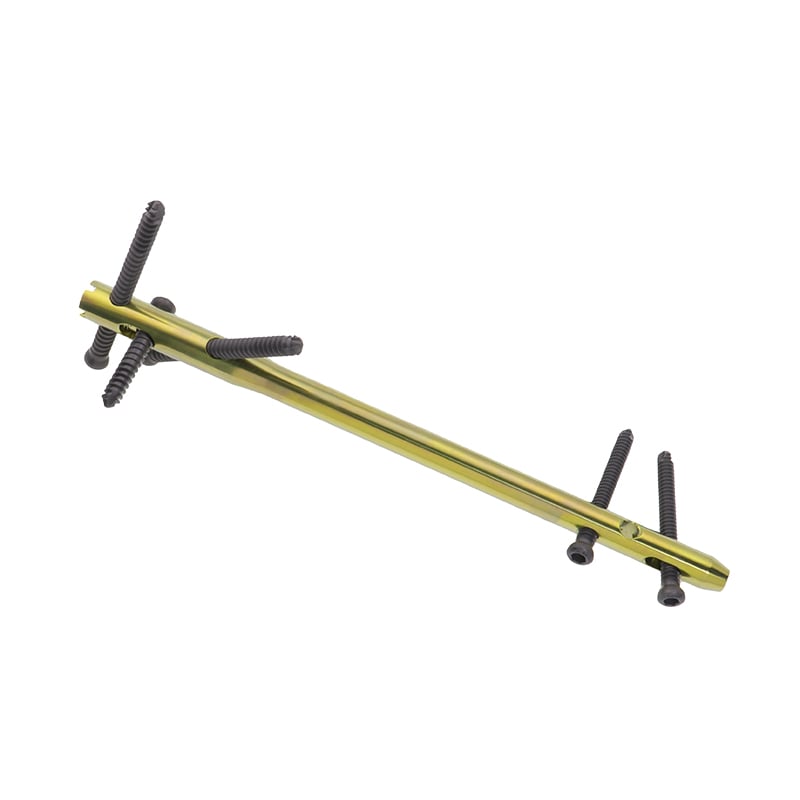
The extendable intramedullary nail represents a meaningful advancement in orthopedic fixation technology. Unlike conventional implants with fixed dimensions, an extendable intramedullary nail is engineered to accommodate length adjustments, allowing surgeons to match the implant precisely to each patient's unique skeletal anatomy. This adaptability addresses one of the most persistent challenges in bone fracture management: the inability of a single fixed-length device to serve the full range of patient sizes, bone morphologies, and clinical presentations.
In clinical practice, the extendable intramedullary nail is applied across a wide spectrum of indications, from long bone fractures in growing pediatric patients to complex reconstructive procedures in adults. The core principle of the extendable intramedullary nail is straightforward: its telescoping or modular mechanism allows the effective working length to be set intraoperatively or adjusted over time as the patient's condition evolves. Understanding how and why the extendable intramedullary nail delivers superior individualization requires examining its design logic, its clinical benefits, and the surgical scenarios where it performs best.
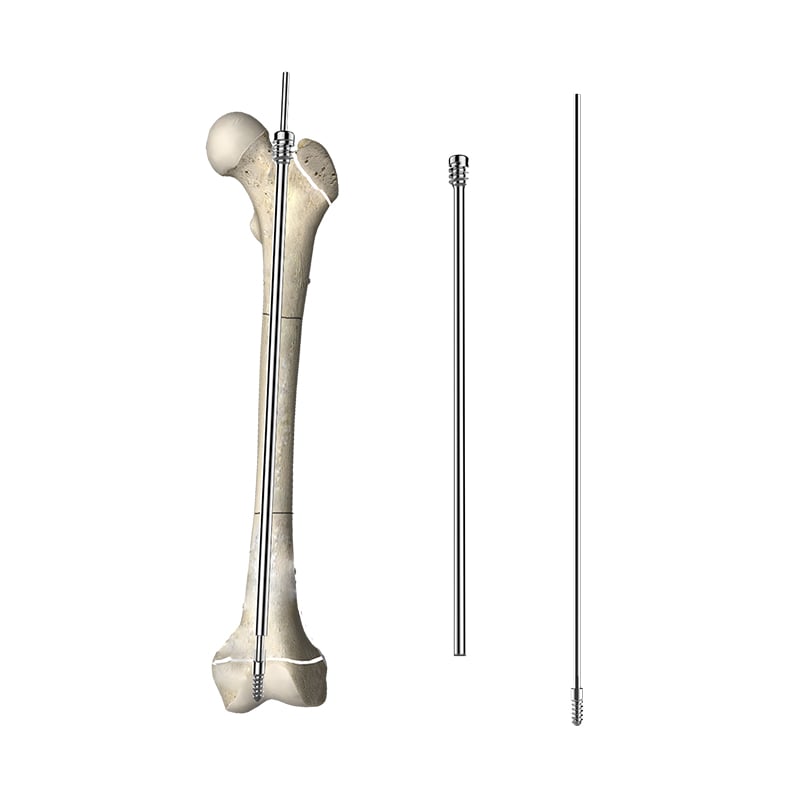
Design Principles of the Extendable Intramedullary Nail
Telescopic Mechanism and Length Adjustment
The extendable intramedullary nail achieves its adaptability through a telescopic inner-and-outer sleeve construction. When a surgeon implants the extendable intramedullary nail, the device can be expanded within the medullary canal to reach an optimal length without requiring an entirely different implant size. This means the extendable intramedullary nail reduces the need to maintain a broad inventory of fixed-length nails, which is a practical advantage in both high-volume trauma centers and smaller surgical facilities. The telescoping segments of the extendable intramedullary nail are precision-machined to allow smooth, controlled extension while maintaining rotational and axial stability throughout the adjustment range.
Material and Structural Integrity
Despite its adjustable nature, the extendable intramedullary nail must maintain rigorous mechanical performance standards. Most designs of the extendable intramedullary nail use medical-grade titanium alloy or stainless steel, chosen for their strength-to-weight ratio, corrosion resistance, and biocompatibility. The locking interfaces within the extendable intramedullary nail are engineered to prevent unintended collapse or over-extension under physiological loading. This structural reliability ensures that the extendable intramedullary nail continues to provide stable fixation throughout the patient's recovery, whether the bone is subjected to daily walking loads or more demanding activity levels during rehabilitation.
Clinical Benefits of Adjustable Length in Bone Fixation
Meeting Individualized Patient Anatomy
One of the most compelling reasons surgeons choose the extendable intramedullary nail is its ability to accommodate the full range of patient anatomy without compromise. A child undergoing treatment for a femoral fracture has very different skeletal dimensions than a tall adult with the same injury. The extendable intramedullary nail bridges this gap by allowing the surgeon to dial in the exact length needed, rather than choosing the 'closest available' fixed implant. This precision reduces the risk of implant mismatch, which can contribute to malunion, cortical perforation, or mechanical failure. The extendable intramedullary nail therefore supports better alignment, more predictable healing trajectories, and improved functional outcomes.
Suitability for Pediatric and Growing Bone
The extendable intramedullary nail finds particular value in pediatric orthopedics, where bone growth is an ongoing variable. In conditions such as osteogenesis imperfecta or other skeletal dysplasias, surgeons rely on the extendable intramedullary nail because it can be extended over time to keep pace with longitudinal bone growth. This reduces the number of revision surgeries a child must undergo compared to fixed-length devices, which become inadequate as the patient grows. The ability of the extendable intramedullary nail to grow with the patient is not a minor convenience — it is a fundamental clinical advantage that reduces anesthetic exposure, surgical risk, and family burden over the course of a child's treatment.
Trauma and Reconstructive Surgery Applications
In adult trauma surgery, the extendable intramedullary nail addresses length variability caused by comminuted fractures, bone loss, or limb length discrepancy correction procedures. When surgeons perform acute fracture repair using the extendable intramedullary nail, they can adjust the device intraoperatively to restore appropriate limb length without relying on supplemental grafting alone. In reconstructive cases involving segmental bone defects, the extendable intramedullary nail provides a stable internal scaffold while the defect is managed through biological or synthetic augmentation. This versatility makes the extendable intramedullary nail a preferred implant choice when the final bone length cannot be determined precisely before surgery begins.
Surgical Considerations When Using an Extendable Intramedullary Nail
Preoperative Planning and Implant Selection
Successful use of the extendable intramedullary nail begins with thorough preoperative planning. Surgeons evaluate radiographic measurements, canal diameter, bone quality, and expected growth or correction range before selecting the appropriate extendable intramedullary nail model. Templating helps confirm that the chosen extendable intramedullary nail will achieve adequate canal fill at its minimum length while still having sufficient extension range. Proper selection ensures the extendable intramedullary nail will not be under-deployed at insertion or over-extended beyond its safe range during later adjustments. Planning also involves identifying the correct locking screw configuration for the extendable intramedullary nail to ensure rotational control is maintained throughout the healing period.
Intraoperative Technique and Postoperative Management
During surgery, the extendable intramedullary nail is introduced using standard medullary preparation techniques, with the adjustment mechanism engaged under fluoroscopic guidance to confirm correct positioning and length. Surgeons verify that the extendable intramedullary nail is fully seated and locked before closing the incision. Postoperatively, patients with a growth-type extendable intramedullary nail are monitored at regular intervals so that any necessary extension of the extendable intramedullary nail can be performed as a planned, minimally invasive procedure. Rehabilitation protocols for patients with an extendable intramedullary nail follow evidence-based progressive weight-bearing guidelines, adjusted according to fracture type, bone quality, and the specific locking configuration used.
FAQ
What types of fractures are best treated with an extendable intramedullary nail?
The extendable intramedullary nail is most commonly used for long bone fractures of the femur and tibia, as well as for pediatric cases involving conditions like osteogenesis imperfecta. It is also applied in reconstructive procedures where bone length correction is required. The extendable intramedullary nail is especially valuable when anatomy variability or ongoing growth makes fixed-length implants insufficient.
How is the length of an extendable intramedullary nail adjusted after implantation?
In growth-type designs, the extendable intramedullary nail can be extended through a minor surgical procedure or, in some advanced systems, through non-invasive magnetic mechanisms. The surgeon confirms the new length under imaging before securing the extendable intramedullary nail at its updated setting. The process is typically brief, well-tolerated, and significantly less invasive than a full implant exchange.
Is an extendable intramedullary nail suitable for osteoporotic bone?
The extendable intramedullary nail can be used in osteoporotic patients when the canal dimensions and bone quality allow adequate purchase. Surgeons may augment fixation with cement or modify the locking configuration of the extendable intramedullary nail to improve stability in lower-density bone. Careful preoperative assessment is essential to confirm that the extendable intramedullary nail will achieve reliable fixation given the patient's specific bone condition.