EN


Support Plate Fixation Versus Trans-Syndesmotic Stabilization for Posterolateral Ankle Fractures: Outcomes of Early Weight-Bearing
Posterolateral malleolar fractures: direct buttress plating versus indirect syndesmotic stabilization—real-world differences in early weight-bearing
This study was published in the European Journal of Orthopaedic Surgery & Traumatology, with Katie Hutchinson as first author. This retrospective cohort from a level I trauma center included 382 posterior malleolar fractures and compared direct posterior buttress plate fixation with indirect trans-syndesmotic stabilization in terms of postoperative complications and weight-bearing status. Overall complication levels were similar between the two groups for infection, loss of reduction, revision, and ankle arthrodesis; the trans-syndesmotic fixation group had a higher implant removal rate. After adjustment for confounders, the buttress plate group had a higher probability of documented early weight-bearing. The study suggests that this phenomenon cannot be attributed entirely to the implant construct itself and is largely related to surgeon preference and non-standardized rehabilitation protocols.
Clinical dilemma of posterolateral posterior malleolar fractures
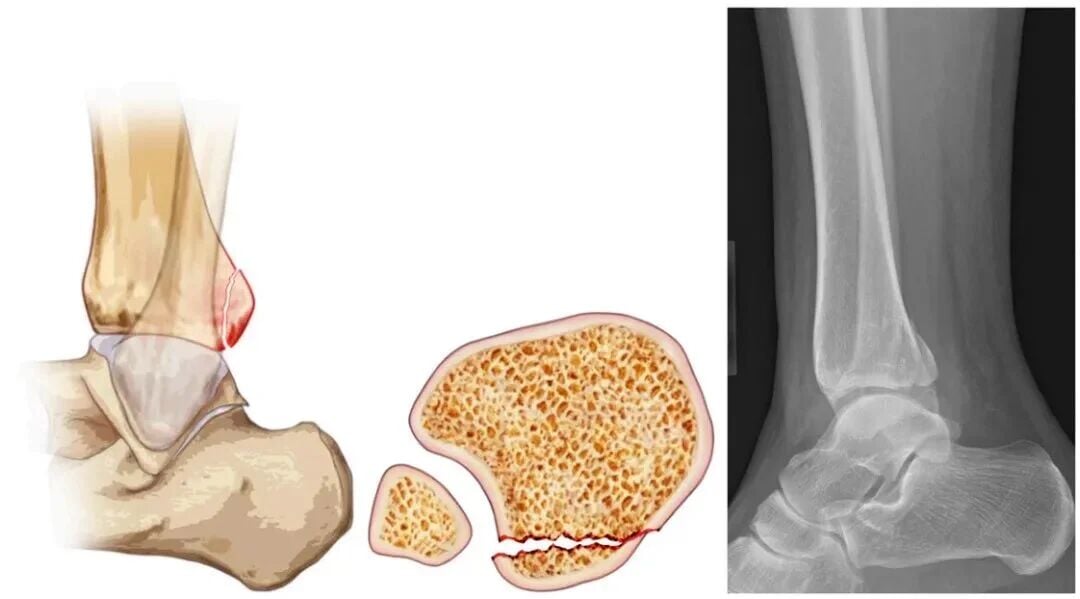
Posterior malleolar fractures account for up to 44% of ankle fractures. Traditional surgical decision-making has largely depended on the proportion of the articular surface occupied by the fragment, often using involvement of ≥20% of the articular surface as the threshold for surgical intervention. Advances in imaging show that fracture morphology has stronger predictive value for stability and outcomes than fragment size alone.
Posterolateral (Volkmann) fragments are often associated with syndesmotic injury. Management is divided into two categories: direct posterior buttress plate fixation, which achieves anatomical reconstruction of the articular surface and the posterior inferior tibiofibular ligament; and indirect trans-syndesmotic stabilization, which reinforces the syndesmotic structure using screws or suture-button constructs. Comparative complication data for the two techniques are insufficient.
The timing of postoperative weight-bearing also remains controversial. Early mobilization has been associated with improved functional recovery, but delayed weight-bearing remains common in UK clinical practice. The relationship between fixation method and postoperative rehabilitation has not been fully clarified. This study conducted a retrospective analysis addressing this real-world issue.
Cohort baseline and assessment methods
This retrospective study used a prospectively maintained trauma database at a level I trauma center from 2012 to 2021. Skeletally mature patients with surgically treated posterior malleolar fractures were included; pilon fractures, cases without posterior malleolar involvement, open fractures, those with less than 8 weeks of follow-up, and cases using other fixation constructs were excluded. A total of 382 cases were included in the final analysis, including 184 in the buttress plate group and 111 in the trans-syndesmotic stabilization group (Table 1). The remaining cases, including those treated with hindfoot nails or without treatment of the posterior malleolar fragment, were not included in the comparative analysis.
The researchers estimated the proportion of the articular surface occupied by the posterior malleolar fragment on postoperative lateral ankle radiographs; when CT data were available, the Mason classification was used to classify the posterolateral fragment. Preoperative CT was not routinely performed in all cases during this period, so the cohort mainly relied on radiographs for standardized measurement. Outcomes included superficial/deep infection, loss of reduction, revision surgery, implant removal, and ankle arthrodesis. Early weight-bearing was defined as full weight-bearing, weight-bearing as tolerated, partial weight-bearing, or toe-touch weight-bearing. Multivariable logistic regression adjusted for confounders including age, sex, open fracture, temporary external fixation, fragment size, and preoperative CT.
Mean follow-up was 10 months in the buttress plate group and 8.8 months in the trans-syndesmotic stabilization group (Table 1).
Complications and implant removal
There were no statistically significant differences between the two groups in infection, revision surgery, ankle arthrodesis, or loss of reduction. The trans-syndesmotic stabilization group had a significantly higher implant removal rate: 42 of 111 cases (37.8%) versus 19 of 184 cases (10.3%) in the plate group, p < 0.001 (Table 2).
In this cohort, most removals in the syndesmotic group were elective planned removals, not unplanned revisions driven by infection or fixation failure. Unplanned removal events were classified under infection and revision outcomes.
Postoperative weight-bearing status
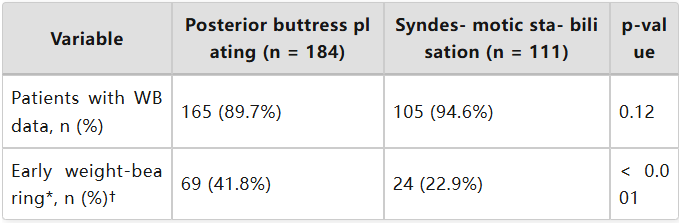
A total of 270 cases had available weight-bearing order records. In the buttress plate group, 165 cases had complete weight-bearing records, and 69 (41.8%) had documented early weight-bearing; in the trans-syndesmotic stabilization group, 105 cases had complete records, and 24 (22.9%) had documented early weight-bearing (Table 3).
After adjustment by multivariable logistic regression, buttress plating remained independently associated with a higher probability of early weight-bearing, adjusted OR 2.81, 95% CI 1.12–11.46. The researchers noted that the confidence interval was wide and that the effect estimate had some imprecision.
Cross-reference with the literature and theoretical differences between techniques
Biomechanical data show that direct posterior malleolar fixation restores approximately 70% of native syndesmotic stiffness, whereas syndesmotic screws alone restore approximately 40%. Direct buttress plating can reconstruct both articular surface morphology and the posterior inferior tibiofibular ligament attachment. However, the posterior approach also carries potential risks of sural nerve palsy and soft tissue irritation.
Existing high-quality randomized controlled trials suggest that after ankle fracture surgery, early weight-bearing is safe regardless of fixation method, does not increase complications, improves early function, and saves healthcare costs. Evidence from the WAX and INWN trials suggests that postoperative rehabilitation depends more on clinical decision-making than on rigid constraints imposed by the fixation construct.
The researchers did not attribute the observed difference in early weight-bearing entirely to the implant itself. Rehabilitation protocols at the center were not standardized, and whether early weight-bearing was permitted largely reflected the surgeon’s subjective confidence in the fixation construct. The biomechanical characteristics of buttress plating may reinforce surgeons’ inclination to accept early weight-bearing.
Routine removal of syndesmotic screws is itself controversial. Reported screw removal rates in published cohorts range from 20% to 80%; routine removal has no clear functional benefit and carries risks of repeat anesthesia, redislocation, and infection. Flexible suture-button devices can reduce secondary surgery, but their use was limited in this study sample.
Limitations of the study
The retrospective design introduces selection bias; fixation strategy was determined by the surgeon and was not randomly assigned. Larger fragments were more often assigned to the buttress plate group; although the multivariable model adjusted for measured imaging variables, unmeasured confounders such as smoking, body mass index, diabetes, dislocation status, and surgeon experience could still interfere with the results.
The infection rate was 15.2% in the buttress plate group versus 9.0% in the combined fixation group, p = 0.123, which did not reach statistical significance and may represent a type II statistical error. Follow-up duration was limited, making it difficult to fully capture long-term outcomes such as post-traumatic osteoarthritis. Preoperative CT was not available for all cases, the Mason classification could not cover the entire sample, and potential imbalance in fracture morphology between groups cannot be completely excluded.
Selection logic conveyed by the study
For posterolateral posterior malleolar fractures, buttress plating and indirect trans-syndesmotic stabilization have comparable overall complication profiles.
A higher proportion of documented early weight-bearing was observed in the direct buttress plate group, but rehabilitation protocols were not standardized; this finding requires cautious interpretation because the phenomenon is confounded by subjective surgeon preference.
For cases with a fragment large enough to allow direct fixation and concomitant syndesmotic injury, direct fixation of the posterior malleolar fragment can be considered an optional strategy, with the potential to reconstruct syndesmotic stability and create conditions for rehabilitation. This conclusion requires further validation by prospective studies with morphology-matched cohorts, standardized rehabilitation, and longer follow-up.
Table 1 Demographic data of patients undergoing direct versus indirect fixation
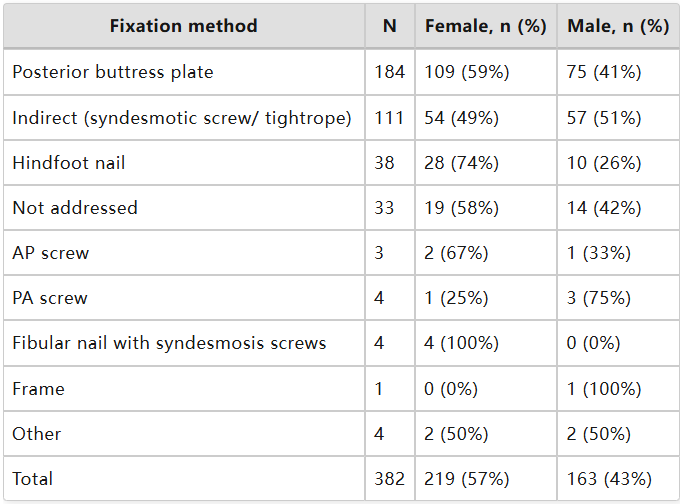
Table 2 Postoperative complications in patients included in the comparative analysis (n = 295)
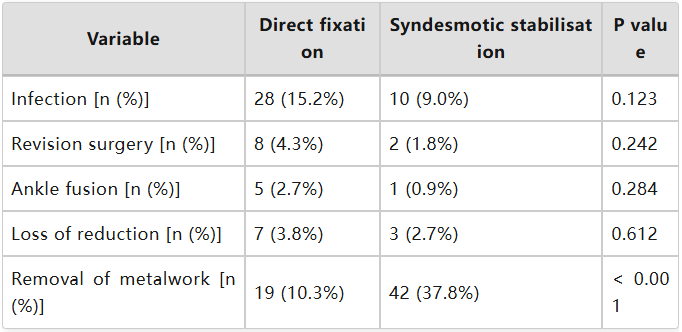
Table 3 Comparison of postoperative weight-bearing status between the two groups
References
Hutchinson K, Crate G, Fenner C, Trompeter A, Nielsen D. Buttress plating versus trans‑syndesmotic stabilisation for posterolateral malleolus fractures: outcomes with early weightbearing. Eur J Orthop Surg Traumatol 2026;36:352. doi:10.1007/s00590‑026‑04904‑w Andersen MR, Frihagen F, Hellund JC, Madsen JE, Figved W (2018) Randomized trial comparing suture button with single syndesmotic screw for syndesmosis injury. J Bone Joint Surg Am 100(1):2–12. Hunt AA, Maschhoff C, Van Rysselberghe N, Gonzalez CA, Goodnough H, Gardner M et al (2024) Historic indications for fixation of posterior malleolus fractures‑ where did they come from and where are we now? Injury 55(6):111537. Blom RP, Hayat B, Al‑Dirini RMA, Sierevelt I, Kerkhoffs GMMJ, Goslings JC et al (2020) Posterior malleolar ankle fractures. Bone Joint J. 102(9):1229–1241. Bennett C, Behn A, Daoud A, Nork S, Sangeorzan B, Dikos G et al (2016) Buttress plating versus anterior‑to‑posterior lag screws for fixation of the posterior malleolus: a biomechanical study. J Orthop Trauma 30(12):664–669. Fitzpatrick E, Goetz JE, Sittapairoj T, Hosuru Siddappa V, Femino JE, Phisitkul P (2018) Effect of posterior malleolus fracture on syndesmotic reduction: a cadaveric study. J Bone Joint Surg Am 100(3):243–248.
......