EN

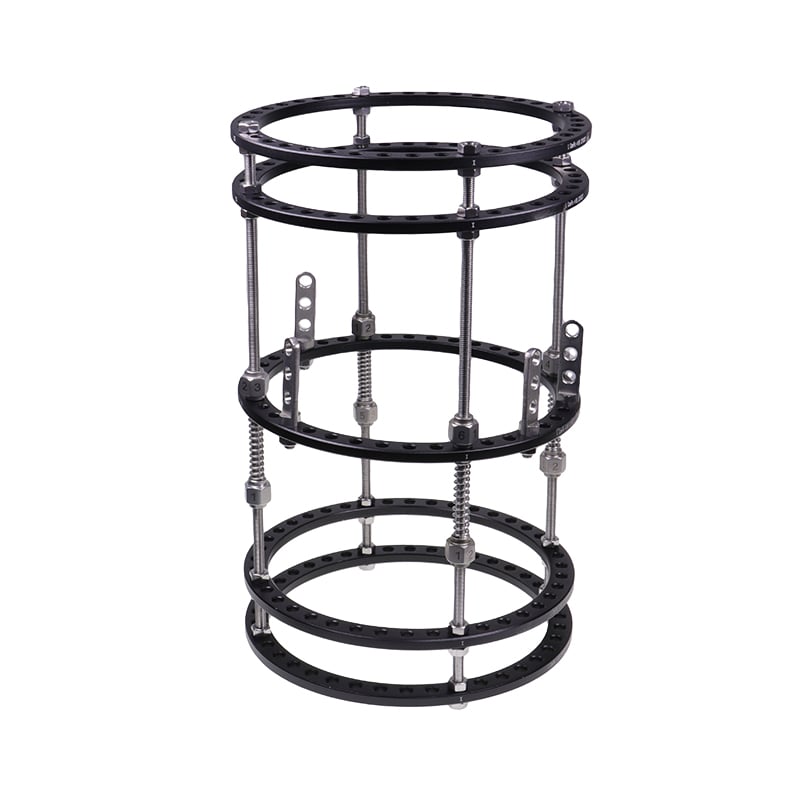
Modern orthopedic treatment demands flexible and effective solutions for complex bone deformities and fractures. Ring external fixation represents a cornerstone technology in contemporary orthopedic surgery, offering surgeons unprecedented control over bone alignment and healing. The evolution of ring external fixation has led to hybrid brace systems that integrate multiple fixation methodologies into single, comprehensive treatment frameworks. These hybrid approaches combine the principles of Ilizarov braces, combined braces, and unilateral braces to create versatile solutions for diverse clinical scenarios. Understanding how ring external fixation adapts across different brace configurations empowers orthopedic professionals to select the most appropriate treatment pathway for each patient's unique condition.

The integration of ring external fixation technology within hybrid brace systems represents a significant advancement in orthopedic treatment design. Hybrid braces leverage the precision of ring external fixation while incorporating elements from traditional and modern fixation approaches. This multi-modal integration addresses the limitations of single-methodology systems by providing surgeons with adjustable correction capabilities, superior load distribution, and enhanced patient compliance. Ring external fixation within hybrid frameworks delivers consistent results across various bone pathologies, from simple fractures to complex deformity corrections. The synergy between different fixation technologies within ring external fixation-based hybrid systems creates treatment options that were previously unavailable to orthopedic practitioners.
Understanding Ring External Fixation Technology
Foundational Principles of Ring External Fixation
Ring external fixation operates on the principle of applying stabilizing forces to bone fragments through circular metal rings connected to the skeletal structure via transfixation wires and half-pins. This ring external fixation approach distributes loads evenly across the fixation construct, reducing stress concentration at individual fixation points. The circular geometry of ring external fixation provides superior biomechanical stability compared to linear fixation systems, enabling controlled gradual correction over time. Ring external fixation allows for precise three-dimensional positioning adjustments through mechanical manipulation of the connecting struts. Surgeons utilize ring external fixation configurations to address comminuted fractures, nonunions, malunions, and significant bone deformities. The versatility of ring external fixation makes it particularly valuable in hybrid brace applications where multiple correction vectors must be managed simultaneously.
Clinical Applications of Ring External Fixation Systems
Ring external fixation serves as the foundation for treating complex tibia and femur fractures in both acute trauma and revision settings. When combined with hybrid brace technology, ring external fixation extends its applicability to include limb lengthening procedures, angular deformity correction, and rotational alignment restoration. Ring external fixation frameworks accommodate simultaneous management of multiple pathologies, such as fracture reduction combined with length discrepancy correction. The ability to perform gradual distraction through ring external fixation components enables biological healing without compromising structural integrity. Ring external fixation systems integrated into hybrid braces facilitate early mobilization and patient functionality during the healing phase. The clinical outcomes associated with ring external fixation in hybrid configurations demonstrate superior union rates and reduced complication profiles compared to traditional methodologies.
Hybrid Brace Architecture and Fixation Integration
Multi-Modality Integration in Hybrid Systems
Hybrid braces represent a convergence of three established fixation philosophies: Ilizarov methodology, combined brace configuration, and unilateral brace principles. The hybrid approach integrates ring external fixation as the primary stabilizing structure while incorporating supplementary fixation elements from complementary systems. Ilizarov principles within ring external fixation-based hybrid braces emphasize gradual distraction osteogenesis and precise temporal control over bone regeneration. Combined braces add segmental fixation capability, allowing independent control of proximal and distal fragments through separate ring external fixation constructs. Unilateral brace components within hybrid ring external fixation systems provide alternative fixation pathways for patients with specific anatomical or clinical constraints. This multi-modality architecture of ring external fixation hybrid systems creates flexibility that single-methodology approaches cannot achieve.
Mechanical Advantages of Ring External Fixation Hybrids
The hybrid ring external fixation construct delivers superior load-sharing characteristics through distributed stress management across multiple fixation points. Ring external fixation within hybrid architectures maintains structural stiffness while permitting controlled micromotion that stimulates callus formation and bone remodeling. The circular configuration of ring external fixation components reduces cantilever bending moments compared to linear external fixation devices. Hybrid configurations incorporating ring external fixation allow surgeons to adjust correction vectors incrementally without requiring revision surgery. Ring external fixation hybrid systems accommodate weight-bearing earlier in the healing process due to enhanced stability, promoting faster functional recovery. The mechanical redundancy built into ring external fixation hybrid constructs provides backup support if individual fixation elements fail, reducing revision rates.
Clinical Integration and Treatment Optimization
Patient Selection and Treatment Planning with Ring External Fixation
Appropriate patient selection for ring external fixation hybrid brace treatment requires careful evaluation of fracture morphology, soft tissue status, bone quality, and patient factors including age and compliance. Ring external fixation hybrid systems prove particularly beneficial for complex intra-articular fractures, metaphyseal fractures with significant comminution, and segmental bone defects. Preoperative planning for ring external fixation applications involves three-dimensional imaging analysis to determine optimal ring positioning, wire trajectories, and correction vectors. Ring external fixation hybrid configurations adapt readily to anatomical variations, making them suitable for pediatric populations through geriatric patients. Treatment protocols utilizing ring external fixation must account for patient tolerance of external fixation devices and capacity to perform prescribed care routines. The versatility of ring external fixation within hybrid frameworks permits customized treatment strategies that address each patient's unique clinical presentation and lifestyle requirements.
Surgical Implementation and Postoperative Management
Implementation of ring external fixation hybrid braces requires meticulous surgical technique to achieve proper wire and pin positioning while preserving critical soft tissue structures. Ring external fixation construct assembly demands careful attention to ring diameter selection, strut orientation, and tension maintenance to ensure optimal biomechanical performance. Postoperative protocols for ring external fixation hybrid systems emphasize early mobilization, pin site care, and regular assessment of fixation integrity. Ring external fixation management involves patient education regarding limb positioning, weight-bearing progression, and recognition of complications including pin tract infection or construct loosening. Radiographic surveillance of ring external fixation healing progress guides timing for distraction initiation, rate adjustments, and consolidation confirmation. Clinical outcomes associated with structured management of ring external fixation hybrid systems demonstrate union rates exceeding ninety-five percent across diverse fracture patterns and patient populations.
FAQ
How does ring external fixation compare to internal fixation methods?
Ring external fixation offers distinct advantages over internal fixation including preservation of blood supply, reduced soft tissue trauma, and applicability to severely comminuted fractures unsuitable for plate fixation. Internal fixation provides faster early stability and reduced time in external devices, whereas ring external fixation permits gradual correction and biological callus development. Ring external fixation hybrid systems bridge these methodologies, combining the biological advantages of external fixation with the mechanical sophistication of modern construct design. Selection between ring external fixation and internal fixation depends on fracture characteristics, patient factors, and anatomical considerations rather than representing absolute superiority of one approach.
What complications can arise from ring external fixation treatment?
Common complications associated with ring external fixation include pin tract infections, loosening of fixation elements, nerve or vascular injury, and delayed union. Ring external fixation hybrid systems address many traditional complications through improved biomechanical design and supplementary fixation support that reduces individual component stress. Patient adherence to pin care protocols significantly reduces infection rates in ring external fixation applications. Serious complications from ring external fixation remain relatively uncommon when proper surgical technique, component selection, and postoperative management protocols are consistently applied.
How long does treatment typically require when using ring external fixation?
Treatment duration with ring external fixation varies substantially based on fracture complexity, required distraction distance, bone quality, and individual healing rates. Simple fractures managed with ring external fixation typically require three to six months of external fixation, whereas complex deformity corrections may extend twelve to eighteen months. Ring external fixation hybrid systems generally follow distraction protocols requiring gradual lengthening at approximately one millimeter daily followed by consolidation phases. Early mobilization and appropriate weight-bearing progression through ring external fixation treatment accelerates healing and permits earlier device removal.