EN
EN

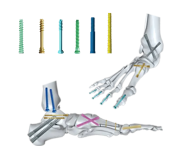
Selecting the right hollow screws for orthopedic procedures requires careful consideration of multiple factors that directly impact surgical outcomes and patient recovery. These specialized medical devices serve critical functions in bone fixation, trauma repair, and reconstructive surgeries where precise mechanical properties determine long-term success. Understanding the relationship between screw dimensions, thread specifications, and clinical applications enables surgeons to make informed decisions that optimize healing while minimizing complications. The choice of appropriate hollow screws involves evaluating bone density, fracture patterns, anatomical constraints, and biomechanical requirements specific to each surgical scenario.
Understanding Hollow Screw Fundamentals
Design Principles and Mechanical Properties
Hollow screws differ significantly from solid screws in their structural composition and mechanical behavior under physiological loads. The central cannulation creates a unique stress distribution pattern that affects both insertion torque requirements and holding power within bone tissue. This hollow design allows for guidewire placement during minimally invasive procedures while maintaining sufficient strength for load-bearing applications. The wall thickness of hollow screws must be carefully engineered to balance flexibility with structural integrity, particularly in areas subject to cyclic loading and rotational forces.
Material composition plays a crucial role in determining the performance characteristics of hollow screws in clinical settings. Titanium alloys remain the gold standard due to their biocompatibility, corrosion resistance, and favorable modulus of elasticity that closely matches bone tissue. The manufacturing process for hollow screws requires precision machining to ensure uniform wall thickness and thread geometry throughout the entire length. Quality control measures must verify that the cannulation diameter remains consistent while maintaining proper thread form and surface finish specifications.
Size Classification and Measurement Standards
Hollow screws are typically classified by their outer diameter, length, and cannulation size, with standardized measurements ensuring compatibility across different surgical systems. Common diameter ranges include 3.5mm, 4.5mm, 6.5mm, and 7.3mm, each designed for specific anatomical locations and loading conditions. Length variations accommodate different bone thicknesses and fixation requirements, ranging from 20mm for small bone applications to 150mm for long bone procedures. The cannulation diameter must be sufficient for guidewire passage while maintaining adequate wall thickness for mechanical strength.
International standards such as ASTM and ISO specifications define dimensional tolerances, material requirements, and testing protocols for medical hollow screws. These standards ensure consistent quality and performance across manufacturers while establishing minimum requirements for biocompatibility and mechanical properties. Surgeons must understand these classification systems to select appropriate hollow screws that match their specific procedural needs and patient anatomy. Documentation requirements mandate that all dimensions and specifications be clearly marked on packaging and surgical instruments.
Thread Design Considerations
Thread Pitch and Profile Optimization
Thread pitch refers to the distance between adjacent thread crests and directly influences the holding power and insertion characteristics of hollow screws. Coarse threads with larger pitch dimensions provide superior pullout resistance in cancellous bone due to increased thread engagement and load distribution. Fine threads offer better holding power in cortical bone where precise thread cutting and minimal bone removal are essential for optimal fixation. The thread profile, including flank angle and root radius, affects stress concentration and fatigue resistance under cyclic loading conditions.
Self-tapping versus self-drilling thread designs each offer distinct advantages depending on bone quality and surgical technique preferences. Self-tapping hollow screws require pre-drilling but provide more controlled insertion and reduced heat generation during placement. Self-drilling designs eliminate the need for separate drilling steps but may generate more bone debris and require careful speed control to prevent thermal necrosis. Thread geometry must also accommodate the cannulation while maintaining sufficient material thickness at the thread roots to prevent failure under physiological loads.
Variable Thread Patterns
Advanced hollow screws may incorporate variable thread patterns that optimize fixation across different bone densities encountered during insertion. Dual-pitch threads feature different thread spacing in the head and tip regions to enhance purchase in both cortical and cancellous bone simultaneously. Progressive thread designs gradually increase in pitch or depth to accommodate changing bone characteristics along the screw path. These sophisticated thread patterns require careful manufacturing control to ensure proper transitions and maintain structural integrity of the hollow screws throughout their length.
Thread treatments such as surface texturing or coating applications can enhance osseointegration and reduce insertion torque requirements. Anodized surfaces provide improved corrosion resistance while maintaining biocompatibility, while specialized coatings may promote bone ingrowth for long-term fixation stability. The interaction between thread geometry and surface treatments must be carefully evaluated to ensure that hollow screws maintain their mechanical properties while enhancing biological performance. Clinical studies continue to evaluate the long-term effects of various thread modifications on patient outcomes and implant longevity.
Clinical Selection Criteria
Bone Quality Assessment
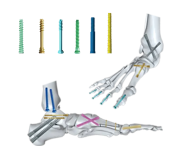
Bone density measurements using DEXA scanning or CT-based analysis provide quantitative data for selecting appropriate hollow screws dimensions and thread specifications. Osteoporotic bone requires larger diameter screws with coarse threads to maximize contact area and distribute loads across more bone tissue. Young, dense cortical bone may benefit from smaller diameter hollow screws with fine threads that provide precise fixation without excessive bone removal. Preoperative planning software can analyze bone quality along the intended screw path to optimize size selection and insertion parameters.
Regional variations in bone density within the same anatomical structure influence hollow screws selection strategies for optimal fixation. Metaphyseal regions with mixed cortical and cancellous bone may require specialized thread patterns or variable pitch designs to achieve uniform load distribution. Age-related changes in bone microarchitecture affect screw holding power and may necessitate longer hollow screws or supplemental fixation techniques. Surgeons must correlate imaging findings with intraoperative bone quality assessment to make final decisions regarding hollow screws specifications.
Anatomical Considerations
Anatomical constraints such as nerve pathways, vascular structures, and joint capsules influence the selection of appropriate hollow screws lengths and insertion angles. Preoperative imaging studies must identify critical structures that could be endangered by screw placement, requiring modifications to standard screw lengths or trajectories. Three-dimensional planning tools enable surgeons to visualize screw paths and select optimal hollow screws dimensions while avoiding anatomical hazards. Patient-specific anatomy may require custom length hollow screws or non-standard thread specifications to achieve safe and effective fixation.
Biomechanical loading patterns vary significantly between different anatomical locations and influence the selection of hollow screws specifications for long-term stability. Weight-bearing bones require larger diameter screws with enhanced thread engagement to resist physiological forces during daily activities. Non-weight-bearing applications may allow for smaller hollow screws that minimize surgical trauma while providing adequate fixation strength. Understanding regional biomechanics helps surgeons select appropriate screw dimensions that will maintain fixation throughout the expected healing period.
Sizing Guidelines and Best Practices
Diameter Selection Protocols
Optimal diameter selection for hollow screws follows established protocols that consider both mechanical requirements and biological factors affecting bone healing. The screw diameter should not exceed 30-40% of the bone diameter at the insertion site to prevent stress concentration and potential fracture. Cortical thickness measurements guide minimum diameter requirements to ensure adequate thread engagement and pullout resistance. Hollow screws with larger diameters provide superior mechanical strength but require more bone removal and may compromise local blood supply.
Intraoperative assessment techniques such as probe testing and tactile feedback help surgeons verify appropriate diameter selection for hollow screws placement. Resistance to insertion provides valuable information about bone quality and thread engagement that may necessitate adjustments to the planned screw size. Fluoroscopic guidance enables real-time verification of screw position and allows for modifications to diameter or length selection based on actual bone anatomy encountered during surgery. These assessment methods help optimize hollow screws selection for each individual patient and anatomical situation.
Length Determination Methods
Accurate length measurement for hollow screws requires careful preoperative planning combined with intraoperative verification to ensure optimal fixation without cortical penetration. Digital templating software allows surgeons to measure bone thickness along the planned screw trajectory using high-resolution CT or MRI images. Depth gauges and calibrated instruments provide precise measurements during surgery to confirm hollow screws length selection. Bicortical fixation typically requires screws that engage the far cortex by 2-4 threads while avoiding excessive protrusion that could irritate adjacent soft tissues.
Safety margins for hollow screws length selection must account for potential measurement errors and intraoperative variations in bone thickness. Conservative length selection helps prevent inadvertent damage to structures beyond the target bone while ensuring adequate thread engagement for stable fixation. Modular screw systems allow for intraoperative length adjustments based on actual bone measurements and surgical findings. Documentation of final hollow screws specifications enables postoperative monitoring and future surgical planning if revision procedures become necessary.
Technical Implementation Strategies
Insertion Technique Optimization
Proper insertion techniques for hollow screws require careful attention to drilling parameters, insertion speed, and torque control to prevent complications and ensure optimal fixation. Guidewire placement through the cannulation provides trajectory control and enables minimally invasive approaches that reduce soft tissue trauma. Drilling speed should be maintained at optimal levels to prevent thermal necrosis while ensuring efficient bone removal and thread formation. Irrigation during drilling helps remove bone debris and controls temperature elevation that could compromise bone viability around hollow screws.
Torque specifications for hollow screws must be carefully controlled to achieve adequate fixation without overtightening that could strip threads or fracture bone. Calibrated torque drivers provide consistent insertion forces that optimize thread engagement while preventing mechanical failure. The cannulated design of hollow screws may affect torque transmission characteristics compared to solid screws of similar dimensions. Surgeons must understand these differences and adjust their insertion techniques accordingly to achieve optimal clinical results with hollow screws applications.
Quality Assurance Protocols
Comprehensive quality assurance protocols ensure that hollow screws meet all specifications and perform reliably in clinical applications. Incoming inspection procedures verify dimensional accuracy, material properties, and surface finish quality before hollow screws are released for surgical use. Sterility validation and packaging integrity checks prevent contamination that could lead to surgical site infections or implant failure. Traceability systems enable tracking of individual hollow screws from manufacturing through implantation to support post-market surveillance and patient safety initiatives.
Post-implantation monitoring protocols track the performance of hollow screws through imaging studies and clinical evaluations to identify potential complications or failure modes. Regular radiographic assessments can detect loosening, migration, or fracture of hollow screws that may require intervention. Patient-reported outcomes and functional assessments provide valuable feedback on the clinical effectiveness of different hollow screws specifications and surgical techniques. This monitoring data helps refine selection criteria and improve future outcomes for patients receiving hollow screws fixation.
FAQ
What factors determine the optimal diameter for hollow screws in orthopedic applications?
The optimal diameter for hollow screws depends on bone density, anatomical location, and mechanical loading requirements. Generally, the screw diameter should not exceed 30-40% of the bone diameter to prevent stress concentration. Denser cortical bone can accommodate smaller diameter hollow screws with fine threads, while osteoporotic bone benefits from larger diameters that distribute loads across more bone tissue. Preoperative imaging and bone quality assessment guide diameter selection to ensure adequate holding power while minimizing surgical trauma.
How does thread pitch affect the performance of hollow screws in different bone types?
Thread pitch significantly influences the holding power and insertion characteristics of hollow screws in various bone densities. Coarse threads with larger pitch provide superior pullout resistance in cancellous bone by maximizing thread engagement and load distribution. Fine threads work better in dense cortical bone where precise cutting and minimal bone removal are essential. The cannulated design requires careful thread geometry optimization to maintain adequate wall thickness while achieving optimal fixation in the target bone type.
What length considerations are important when selecting hollow screws for bicortical fixation?
Bicortical fixation with hollow screws requires careful length selection to achieve far cortex engagement of 2-4 threads without excessive protrusion. Preoperative templating using CT or MRI images helps measure bone thickness along the planned trajectory. Safety margins of 2-3mm account for measurement variations and prevent inadvertent damage to adjacent structures. The guidewire technique enables real-time length verification during surgery, allowing adjustments based on actual bone anatomy encountered.
How do material properties affect the selection of hollow screws for specific applications?
Material properties such as modulus of elasticity, yield strength, and biocompatibility directly influence hollow screws performance in clinical applications. Titanium alloys provide optimal biocompatibility and mechanical properties that closely match bone tissue characteristics. The hollow design creates unique stress distributions that require materials with appropriate fatigue resistance and corrosion protection. Surface treatments and coatings can enhance osseointegration while maintaining the mechanical integrity of hollow screws throughout their intended service life.
Table of Contents
- Understanding Hollow Screw Fundamentals
- Thread Design Considerations
- Clinical Selection Criteria
- Sizing Guidelines and Best Practices
- Technical Implementation Strategies
-
FAQ
- What factors determine the optimal diameter for hollow screws in orthopedic applications?
- How does thread pitch affect the performance of hollow screws in different bone types?
- What length considerations are important when selecting hollow screws for bicortical fixation?
- How do material properties affect the selection of hollow screws for specific applications?